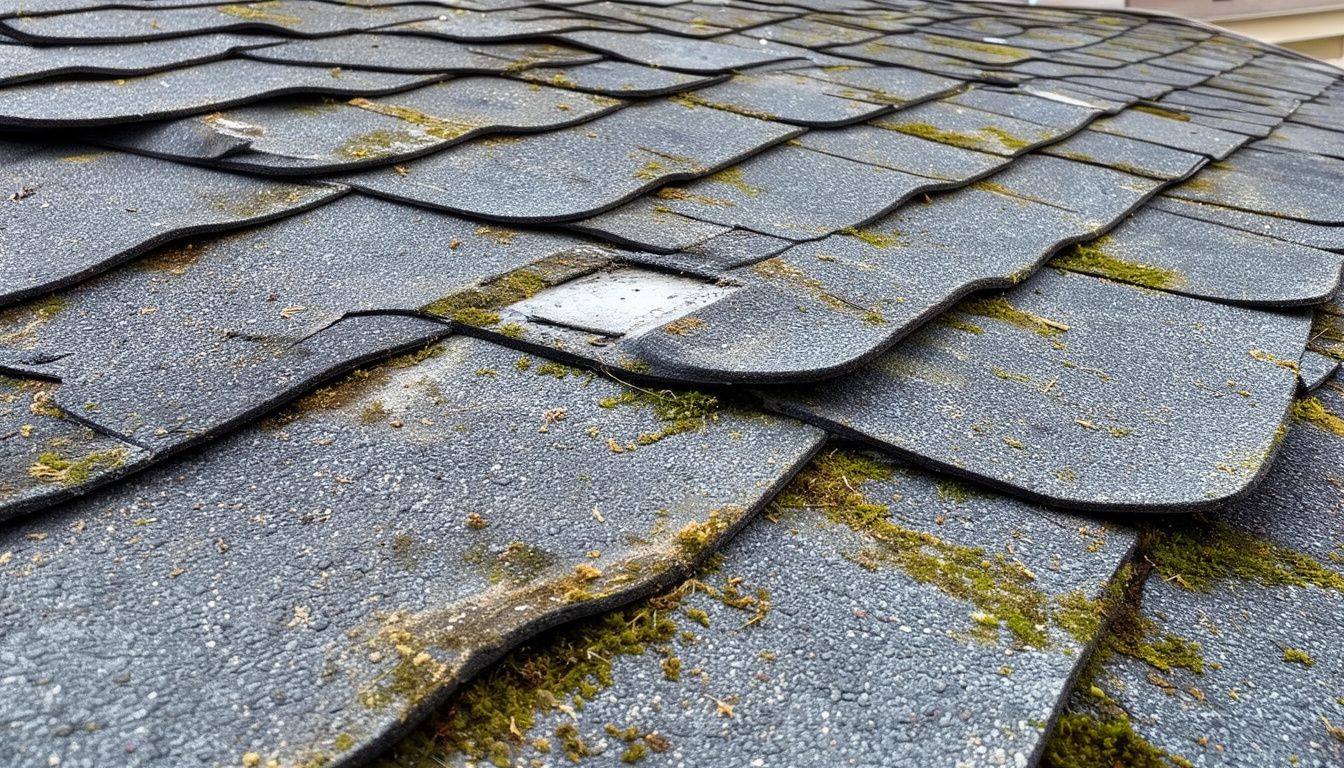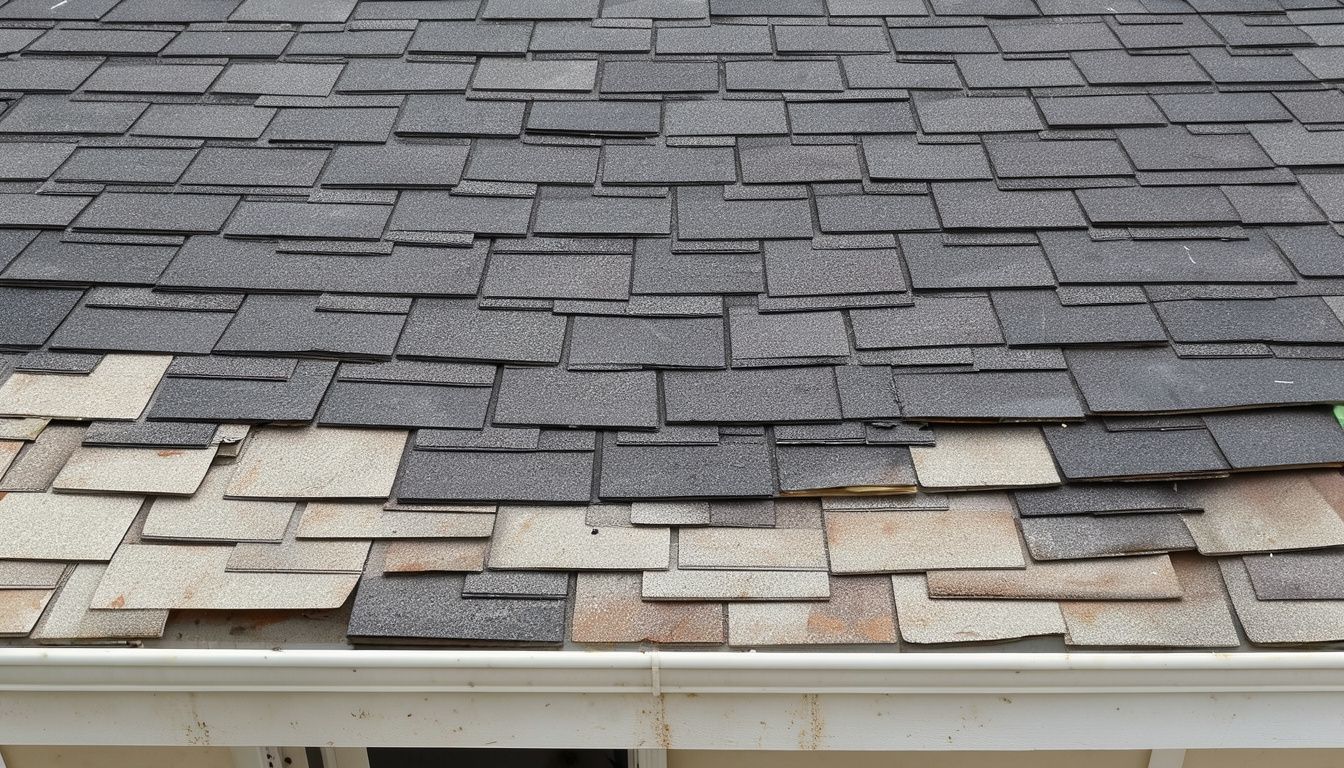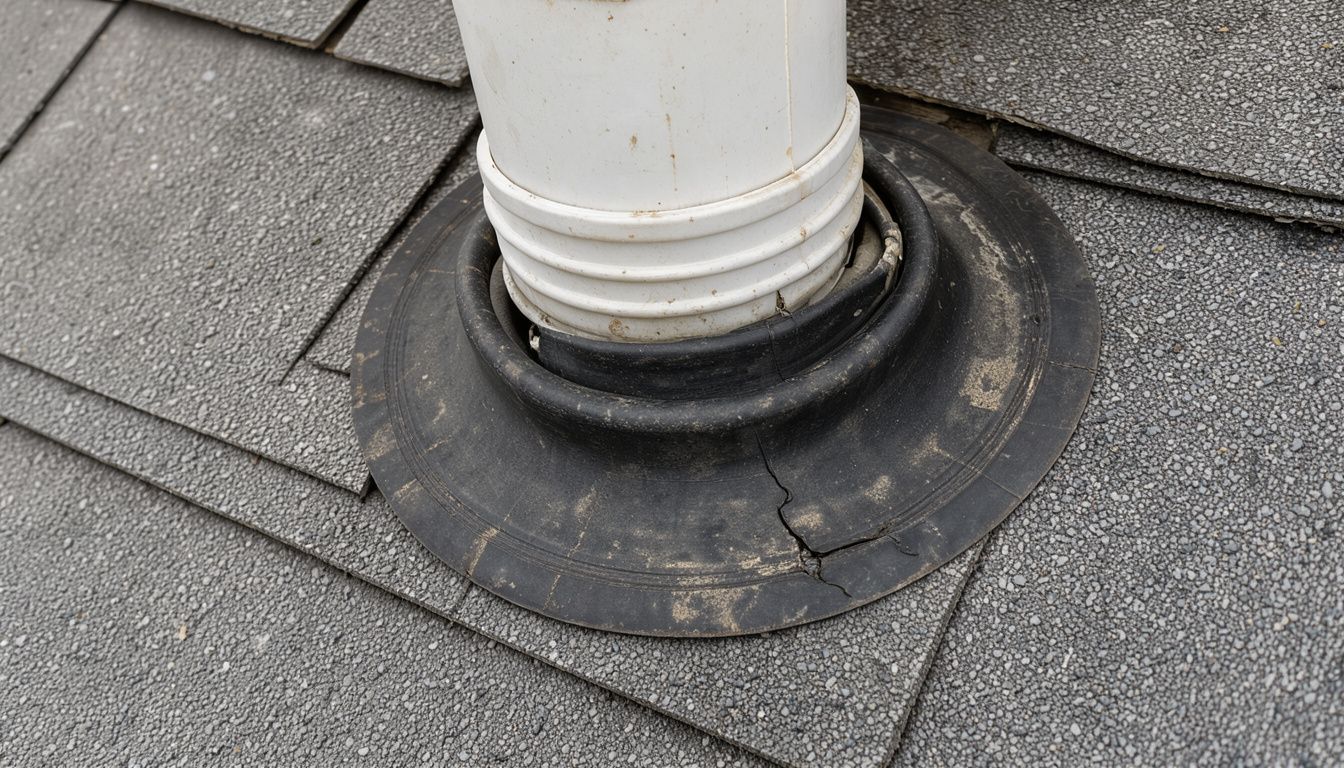
A good roof inspection checklist works from the outside in: walk around the house with binoculars, check the gutters and drainage, scan the roof surface for your material, look closely at flashing and vents, then go into the attic and finish on the ceilings below. NRCA recommends inspections at least twice a year, in spring and fall, plus after severe weather. Most of it can be done without ever stepping on the roof.
The short version
- Inspect in spring and fall, and again after hail, high winds, a hurricane or a tornado.
- Stay on the ground or at the top of a ladder at the eaves. NRCA and ARMA both advise homeowners against walking on the roof.
- Look for curled, cracked, missing or bald shingles, rusted or lifted flashing, clogged gutters and sagging lines.
- In the attic, look for stains, damp insulation, musty smells, blocked vents and points of light.
- Photograph everything with a date, and keep a running roof history file.
- Call a professional for anything you cannot see clearly, any active leak, and any insurance, warranty or sale situation.
Before you start: safety and tools
Stay off the roof surface
NRCA does not recommend that homeowners access or walk on roofs unless they have the experience and proper equipment to do it safely. ARMA is even more direct: homeowners should not climb onto their roofs. For steep-slope roofs, NRCA notes that a maintenance inspection can typically be done from the ground or from a ladder at the roof edge.
Walking a roof also causes damage. ARMA points out that roof systems are not generally designed for extensive foot traffic, tile can crack underfoot, and scratches on sheet metal can expose the steel and start corrosion.
Ladder rules if you go to the eaves
OSHA's portable ladder guidance says an extension ladder used to reach an elevated surface must extend at least 3 feet above the point of support. NRCA's advice for owners adds that the ladder should be tied to the roof's edge.
- Look for overhead power lines before you carry or raise the ladder.
- Keep three points of contact while climbing: two hands and a foot, or two feet and a hand.
- Do not stand on the top three rungs of an extension ladder.
- Keep the rungs, steps and feet clear of slippery material, as OSHA requires, which means waiting out wet or icy weather.
What to bring
- Binoculars, which ARMA calls a good tool for the inspection, or a phone camera with good zoom.
- A flashlight or headlamp for the attic.
- Safety glasses, gloves and a dust mask for the attic, as ENERGY STAR recommends.
- The printed checklist below to log what you find, as NRCA's homeowner guide suggests, plus your phone for dated photos.
- Boards to walk on if the attic has no floor, another ENERGY STAR item.
The inspection order
Work in the same order every time so you do not skip anything and your photos line up from one season to the next.
- Walk the perimeter. Scan every slope from the ground with binoculars, using the part 1 list.
- Check the drainage. Look at gutters, downspouts and any low-slope sections (part 2).
- Read the roof surface. Use the list for your material (part 3).
- Zoom in on flashing and penetrations. Chimneys, walls, valleys, vents and skylights (part 4).
- Go into the attic. Check the deck, stains, ventilation and insulation (part 5).
- Finish on the ceilings. Walk the top floor rooms (part 6).
- Record it. Date your photos and notes and add them to your roof history file.
Checklist part 1: from the ground
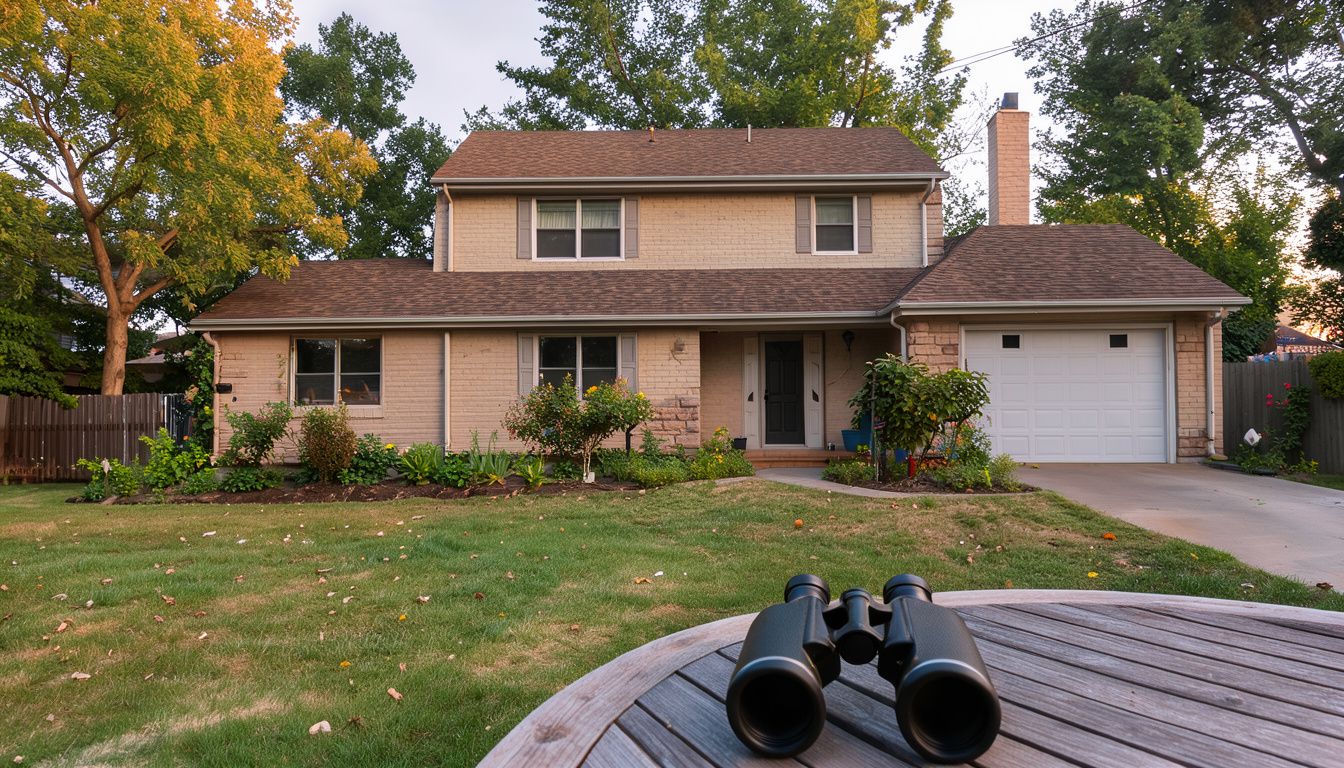
Owens Corning notes that signs of an aging roof can often be seen from ground level, and a second-floor window can give a closer look at the shingles. Walk the full perimeter and stop at each corner so you see every slope at an angle.
That last item matters more than it looks. NRCA reports that in many instances, equipment added after installation does not make a proper connection to the roof, and incorrect work of this type can damage the roof or invalidate its warranty.
Checklist part 2: gutters, downspouts and drainage
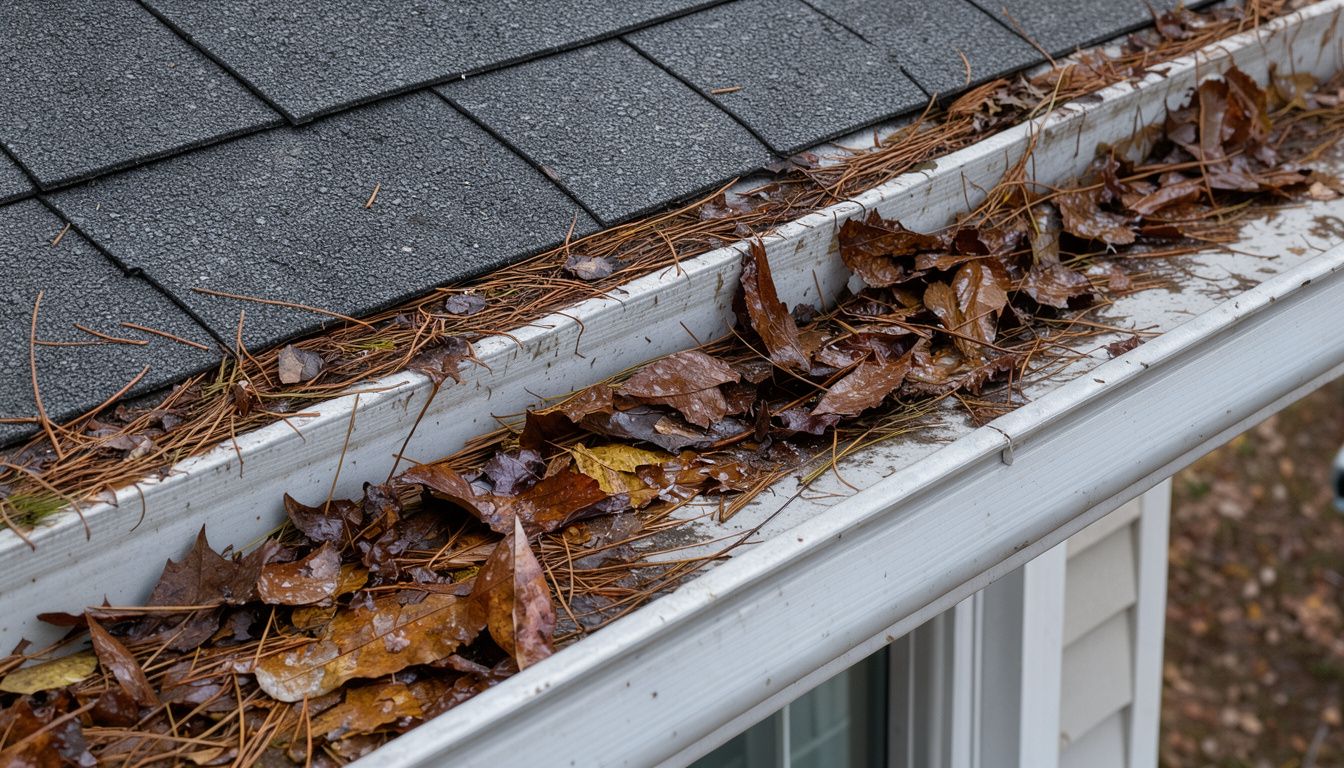
NRCA singles out valleys, gutters and roof drains as places where debris builds up and limits drainage. Cleaning gutters and downspouts is on its short list of routine maintenance tasks.
How far should water go? Oklahoma State University Extension says downspouts should drain at least 6 feet away from basement walls and at least 2 feet away from a crawl space. Always aim the water away from the foundation and away from your neighbor's lot.
A gutter full of granules is worth a second look but is not proof of failure on its own. IKO notes that some granule loss is normal, and IBHS says loose granules do not mean there is hail damage.
Checklist part 3: the roof surface, by material
NRCA's maintenance guidance treats the surface differently depending on the material. Use the list that matches your roof.
Asphalt shingles
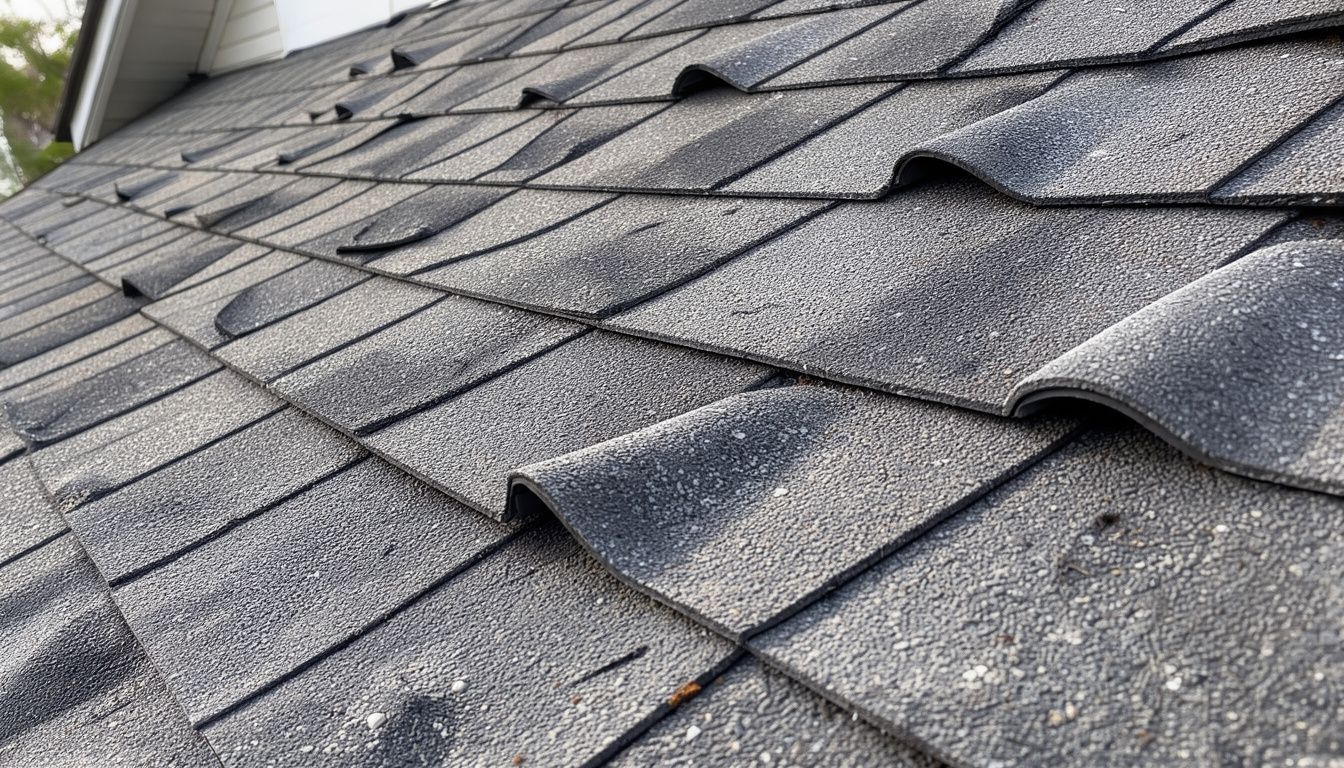
- Curling or splitting, which NRCA describes as evidence of deterioration.
- Cupped tabs, cracks and bald patches.
- Lifted or unsealed tabs. IBHS says that after 7-10 years the shingle sealant weakens enough to cut its wind resistance significantly.
- Random impact marks after hail, as opposed to even wear.
- Nail pops, which HomeGuide says may indicate more serious roofing problems.
ARMA says a few missing or broken shingles should be individually replaced, while a more widespread loss may indicate a need for reroofing.
Metal roofs
A maintenance article in Facilitiesnet lists the main distress conditions on metal roofing: movement of panels and fasteners, sealant failures, worn fastener gaskets, snow, ice or hail damage, failing coatings and clogged gutters.
- Loose or backed-out screws and worn fastener gaskets.
- Dried or missing sealant at penetrations and along edges. The same source notes that most sealants will not last more than 20 years.
- Scratches, failing coatings and any rust.
- Dents after hail.
Clay and concrete tile
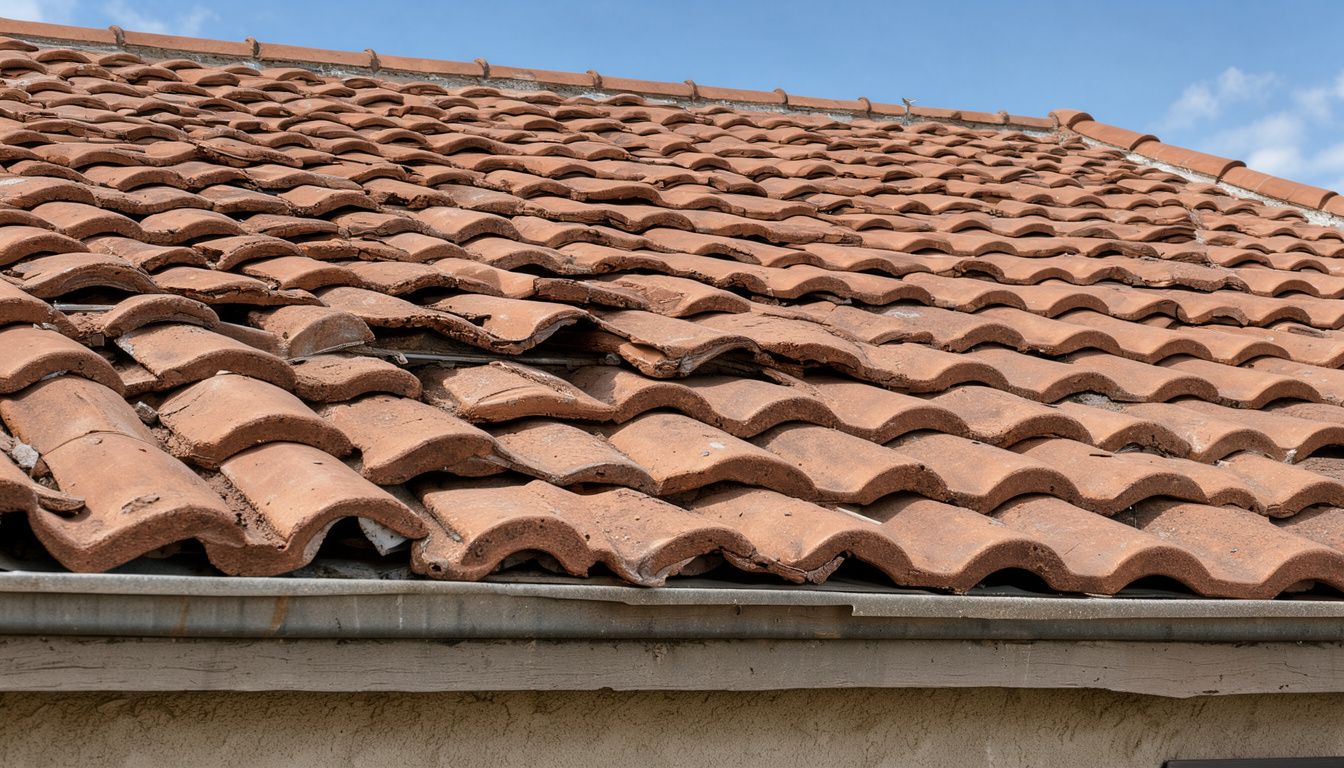
Eagle Roofing, a concrete tile maker, warns that broken tiles can be difficult to spot from the ground, so binoculars matter here. IBHS adds that large hail can crack or shatter tile.
- Cracked, chipped, slipped or missing tiles, especially along ridges and eaves.
- Exposed underlayment where a tile is gone.
- Debris trapped in valleys and between tile rows.
Eagle says broken tiles should be replaced as soon as possible. If someone must walk the roof, the manufacturer says to step on the bottom three inches of each tile, where the lap below supports it.
Wood shakes and shingles
NRCA notes that plant matter collects in valleys, gutters and chimneys on wood roofs and settles between the shakes. Shaded areas dry slowly and are the first to grow fungi, then lichens and moss.
- Split, curled, cupped, loose or missing shakes.
- Hip and ridge pieces that are loose, missing or open at the joints.
- Moss and lichen. NRCA says a professional should remove them and check those areas for decay.
Slate
For slate, as for tile and wood, NRCA says any cracked, broken or missing pieces need to be repaired or replaced to keep the roof weathertight. From the ground, look for slipped slates and gaps in the courses. Leave close inspection to a roofer who works on slate, since NRCA's advice against homeowners walking roofs applies here too.
Low-slope and flat sections
If a porch, addition or garage has a low-slope roof, ARMA lists ponding water, open seams and loose fasteners as the warning signs to watch. Keep drains and scuppers clear of leaves.
Checklist part 4: flashing, vents, chimneys and skylights
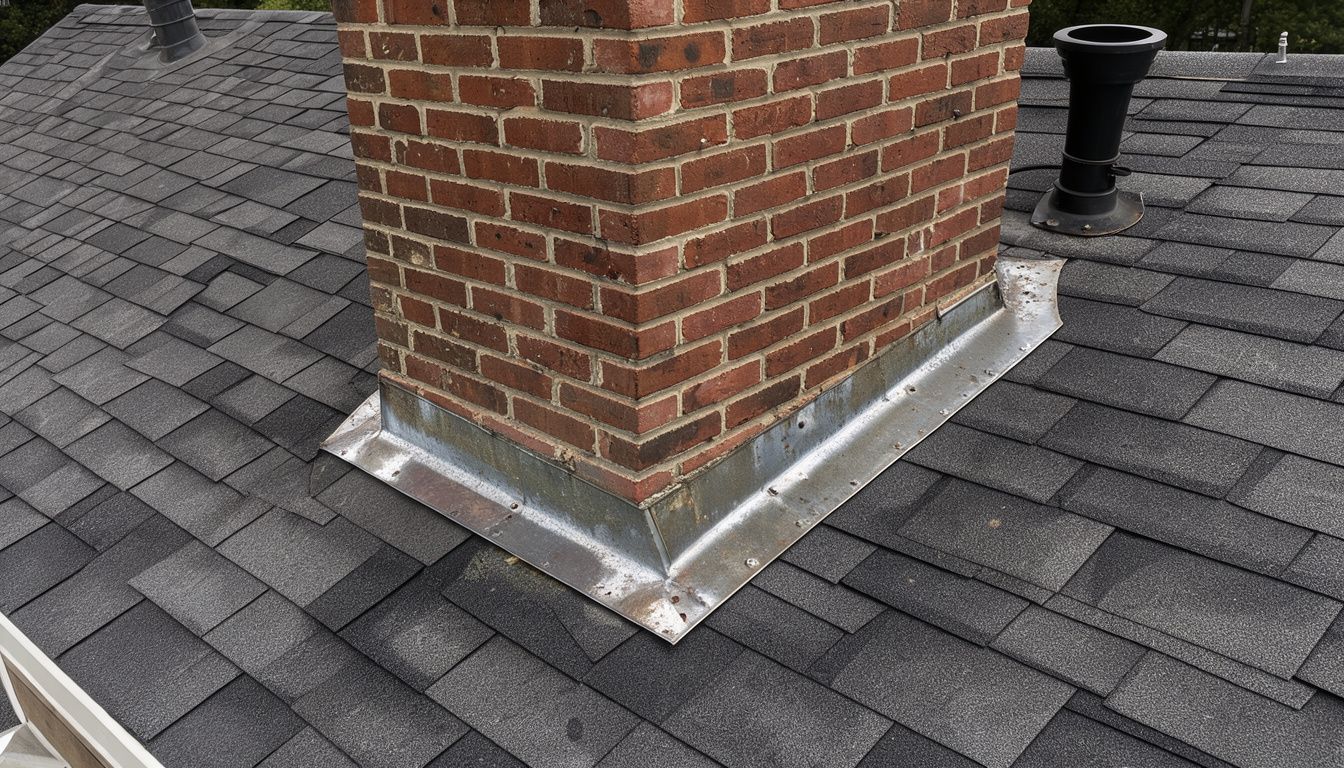
ARMA notes that leaks often occur where roofs meet sidewalls and around penetrations such as skylights, vent pipes and chimneys. Owens Corning's inspection list shows what a pro looks for at each one.
Checklist part 5: the attic
The attic shows problems before they reach your ceilings. ARMA suggests shining a flashlight into the attic during a rainstorm to reveal active leaks on the underside of the roof deck. Go up again on a bright day.
ENERGY STAR's attic safety tips apply here: walk only on joists or truss chords, never on exposed drywall or insulation, and watch for roofing nails poking down through the deck. Do not disturb vermiculite insulation, a lightweight, pea-size, flaky gray mineral, unless a lab has tested it for asbestos.
Decking and framing
- Sagging between rafters, or a ridge that dips.
- Soft spots or slight discoloration on the wood of the deck.
- Rot or wide gaps between deck boards on older homes. ARMA lists rotted or warped wood and large gaps between boards as reasons to replace rather than recover.
ARMA says that if the roof does not look straight and does not feel solid, the structure should be checked by a licensed structural engineer.
Stains, mold and moisture
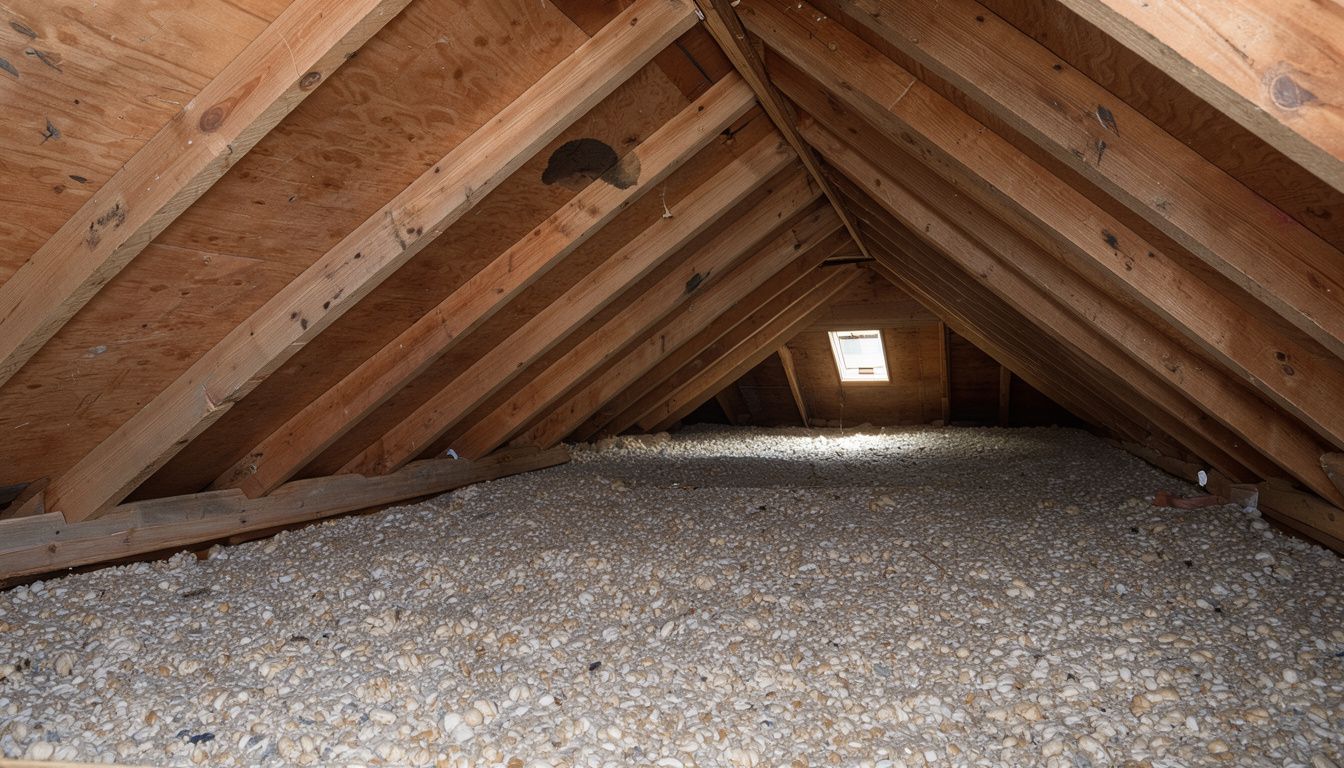
- Water stains or dark rings on rafters and the underside of the deck.
- A faint musty smell, which IKO lists among the early signs people often miss.
- Mold or mildew on the sheathing.
- Condensation that seems excessive or persistent, another early sign on IKO's list.
Not every wet spot is a roof leak. IKO notes that poor ventilation and inadequate insulation can cause condensation on wood surfaces that mimics a leak. ARMA estimates that a family of four generates about 2 to 4 gallons of water vapor a day, and that moisture rises into the attic.
Daylight
Turn off your light and look up. Points of light through the deck show openings that rain may also find. Light at a ridge vent or soffit vent can be normal, since those openings are there to move air.
Ventilation
Attic ventilation lowers attic temperatures and removes excess moisture, as IIBEC explains. ARMA warns that improper ventilation can lead to premature deterioration of both shingles and roof deck.
- Soffit (intake) vents blocked by insulation or painted closed.
- Missing insulation baffles at the eaves, a common cause of blocked intake vents according to IIBEC.
- Exhaust vents that are blocked, crushed or full of debris.
As a reference point, the code minimum quoted by IIBEC is a net ventilating area of 1/150 of the vented space, or 1/300 when specific conditions are met. IIBEC adds that intake should always be equal to or more than exhaust, or the attic can pull air from the house through ceiling openings.
Insulation
- Wet, compressed or displaced insulation, which Owens Corning lists as an inspection item.
- Thin spots along the eaves. ENERGY STAR notes there is sometimes enough insulation in the middle of the attic and very little at the edges.
- Joists you can easily see. ENERGY STAR says that if insulation is level with or below the floor joists, you should add more.
ARMA notes that damp insulation causes wood rot, mold and mildew, so wet insulation is a roof inspection finding, not only an energy one.
Checklist part 6: interior ceilings and walls
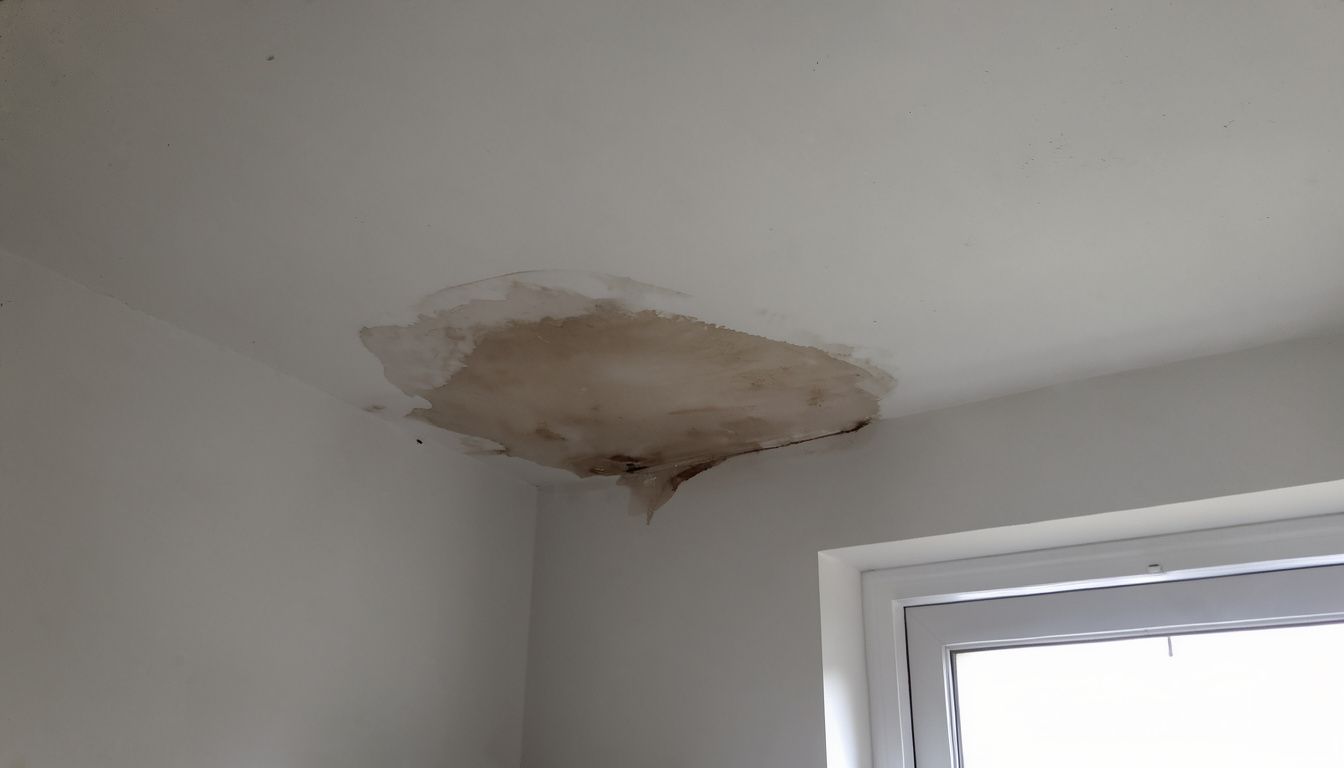
ARMA recommends checking interior walls and ceilings for old stains and water damage. Pay special attention to rooms under valleys, chimneys and skylights, where HomeGuide says stains often point to flashing failure.
Before blaming the roof, IKO suggests checking whether plumbing lines, bathroom fixtures or laundry equipment run above the stain. Stains can also come from an old, resolved leak or attic condensation.
What you see, what it may mean, how urgent it is
This table pulls the checklist together. It is a guide for deciding who to call and how soon, not a diagnosis.
| What you see | What it may mean | Urgency |
|---|---|---|
| Active drip, wet ceiling or wet deck | Water is getting in now, through the roof covering, flashing or a penetration | Act now: protect the interior and call a roofer |
| Sagging ridge or roofline, soft deck | Water damage, snow load or framing problems | Act now: roofer, and possibly a structural engineer |
| Missing shingles, tiles or ridge caps | Wind damage or weakened sealant; IBHS notes the underlayment is then exposed to wind loads | Within days, especially before rain |
| Random dents or bruises after a storm, dented gutters | Possible hail damage | Soon: document and contact your insurer |
| Rusted, lifted or torn flashing | Leak point forming at a chimney, wall or valley | Within weeks |
| Cracked vent boot | Leak path around a plumbing vent | Within weeks |
| Curled, cupped or cracked shingles across slopes | A roof that may be past its prime, in Owens Corning's words | Plan: get a pro inspection and replacement quotes |
| Bald spots and granules in gutters | Normal weathering or advanced wear, depending on extent | Monitor; have a pro assess if widespread |
| Ceiling stain that does not grow | Old leak, condensation or plumbing | Investigate the source before painting |
| Persistent condensation or damp insulation in the attic | Ventilation or insulation problem | Before winter: ventilation and insulation check |
| Ice dams at the eaves | Heat loss into the attic, possible water backup | During winter: watch interior walls; fix insulation and ventilation |
| Dark streaks | Algae, which Owens Corning says may not harm the shingles | Low; do not pressure wash |
| Moss or lichen | Trapped moisture, possible decay on wood roofs | Months; have it removed carefully |
| Clogged gutters, short downspouts | Debris limiting drainage, water discharged too close to the foundation | Next dry day: clean and extend |
Two stains that are usually cosmetic
ARMA describes algae discoloration as brown to black streaks that may be mistaken for soot, dirt, moss or tree droppings. Do not use a power washer or any brush or broom on it, ARMA warns, because both can damage the roofing.
Moss is different. Owens Corning notes that moss holds moisture against the surface and, in freezing climates, can damage the granules over time. Brushing it off can also damage the top of the shingle.
Ice dams
Ice dams form when snow melts on the warmer upper part of a roof and refreezes over the colder eaves, as Professional Roofing explains. IKO notes that ice dams are often a sign of inadequate attic insulation or ventilation, even though they can push water into the house whatever the cause.
How often to inspect your roof
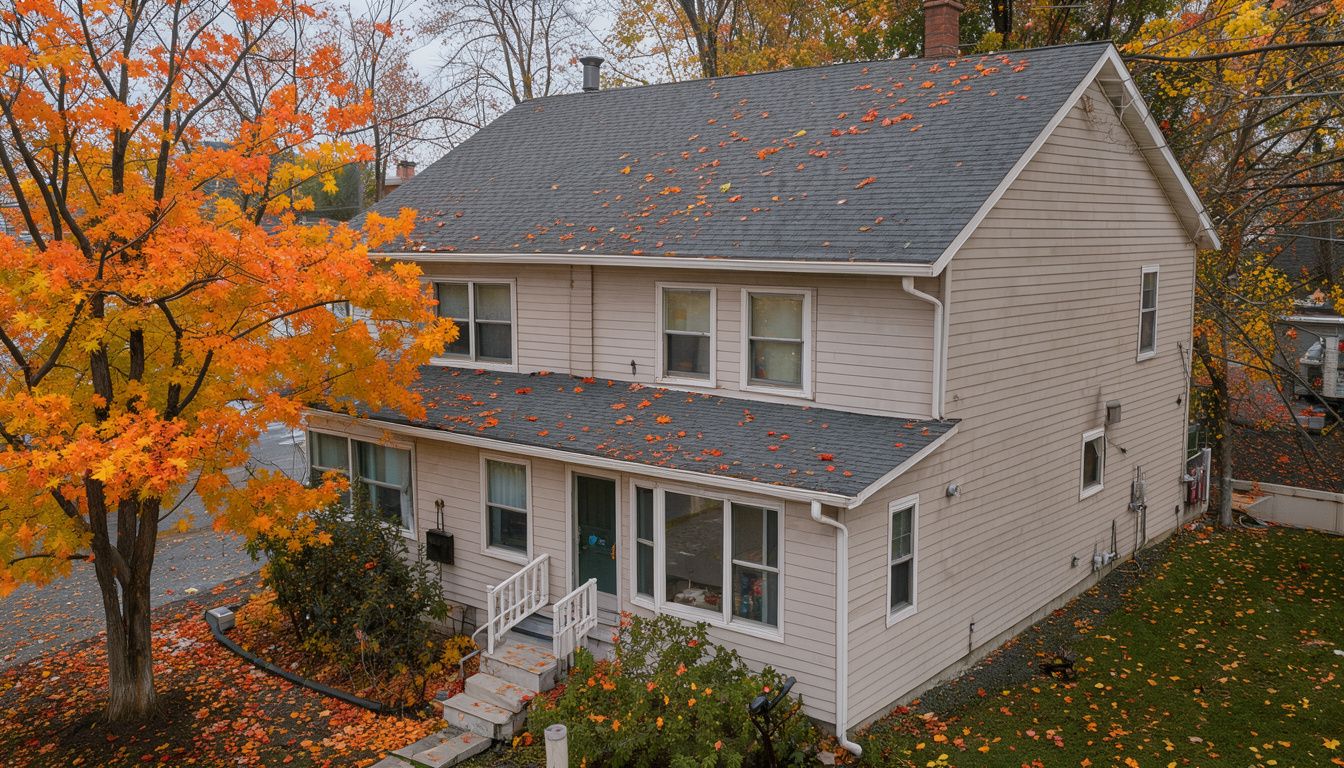
The routine schedule
NRCA recommends scheduled roof inspections at least twice a year, preferably in spring and fall. Its reasoning: asphalt shingle roofs take the most wear during below-freezing periods and periods of the most intense sun and heat, so spring and fall checks catch seasonal damage before the next season.
The Oklahoma Insurance Department encourages homeowners to have their roofs inspected by a reputable expert once a year or after a major hail or wind event. HomeGuide recommends a self-check twice a year and a professional inspection every 3 years for a shingle roof and every 5 years for a tile roof.
Events that call for an extra look
- Any severe storm: hail, hurricane, tornado or high winds.
- Hail of one inch or larger, the size the National Weather Service uses for a severe storm.
- Before and after any work on the roof or next to it, such as solar, satellite or chimney work, as NRCA suggests.
- After a fire or other damage to homes in your area.
- Before you buy a home, sell one or switch insurers.
- When neighbors with similar-age homes start replacing their roofs, which Owens Corning lists as a sign to check yours.
What a professional roof inspection includes
Your own check and a professional inspection do different jobs. Use both.
What your own check does well
- Costs nothing but time, and you can repeat it every spring and fall.
- Covers most warning signs from the ground, a ladder at the eaves and the attic.
- Builds the dated photo record that helps with insurance and warranty questions.
Where a professional is needed
- Close-up checks on the roof surface, which NRCA and ARMA advise homeowners not to do.
- Moisture you cannot see, which infrared scans are designed to find.
- Insurance claims, warranty claims and home sales, where Owens Corning says only a professional inspection is acceptable.
Who does roof inspections
Owens Corning lists three kinds of professionals who do roof inspections: roofing contractors, roof inspectors and home inspectors. HomeGuide notes a trade-off: a certified home inspector has no financial interest in roof repair, while a roofing contractor benefits from finding damage.
Owens Corning cautions that not all home inspectors are qualified for a thorough roof inspection, so look for one with roof experience. HomeGuide suggests choosing an inspector certified by InterNACHI or the National Roof Certification and Inspection Association (NRCIA).
What a roof inspector looks for
Owens Corning says a professional looks at the whole system: the deck and framing, the surface materials and flashing, and the attic and crawl spaces. The inspector also judges workmanship, since improper nailing, below-standard materials and incorrect shingle placement can all shorten the time a roof stays watertight.
- Shingles: curled edges, cracks, granule loss, moss, missing or loose pieces.
- Flashing, chimneys, vents and skylights, as in part 4 above.
- Underlayment: whether an ice and water barrier is present where ice dams can occur.
- Attic insulation: wet, displaced or too thin.
- Deck: solid, with no sagging or soft spots.
Drones, infrared and satellite images
Owens Corning notes that drones make it easy to see under overhangs and above steep dormers. HomeGuide adds that drone inspections need good weather, since wind and rain can damage the cameras.
Infrared scanning looks beyond the surface for trapped moisture. HomeGuide explains that wet areas hold heat longer than dry ones, so they show up as hot spots. Owens Corning notes that infrared is used most on commercial and low-slope roofs, though some companies offer it on homes. Satellite images help contractors measure square footage and slope before writing an estimate.
What the report should contain
HomeGuide says a quality inspection report runs 3 to 4 pages and usually arrives 1 to 2 days after the visit. Expect:
- The address, date and inspector's contact details.
- The scope: what was and was not inspected.
- Roof size, material, pitch, overall condition and life expectancy.
- Itemized findings by area, with photographs.
- Recommendations that flag urgent repairs.
- A repair or replacement estimate, sometimes in a separate quote.
A professional report is also what counts on paper. Owens Corning notes that for an insurance claim, a warranty claim or a real estate transaction, only a professional inspection is acceptable.
How much a roof inspection costs
HomeGuide puts a roof inspection at $100 to $400 on average, with a national average of $280 and a reported range of $75 to $1,200. Price depends on roof size, complexity and the type of inspection. A professional inspection takes 45 minutes to several hours.
| Service | HomeGuide cost range | Notes |
|---|---|---|
| Physical roof inspection | $75 to $200 | Most common; the inspector climbs the roof |
| Drone roof inspection | $100 to $450 | Faster and safer on steep or tall roofs |
| Infrared roof inspection | $400 to $600 | Thermal scan for trapped moisture |
| Roof certification (added) | $75 to $200 | Estimates remaining life for a sale or insurer |
| Separate attic inspection | $200 to $500 | Structure, insulation and ventilation |
| Home inspection (includes the roof) | $250 to $400 | Limited visual or full physical roof check |
| Commercial roof inspection | $200 to $600 | Or $0.05 to $0.10 per square foot |
Steeper roofs cost more because they may require a drone or infrared inspection, and HomeGuide notes that winter weather raises inspectors' rates. For context, HomeGuide puts minor roof repairs at $150 to $1,000 and minor flashing repairs at $200 to $500.
About no-cost inspections
Some contractors offer an inspection at no charge with a repair or replacement estimate. IBHS advises homeowners to avoid unsolicited offers to inspect or repair a roof. HomeGuide also notes that an inspection scheduled by your insurer to investigate a claim may affect your premiums and continued coverage.
How to document your roof for insurance
Good records help with any claim and with the "wear and tear" question. The Connecticut Insurance Department notes that damage caused by age or pre-existing damage could be denied, which is why dated inspection photos from before a storm are useful.
Build a baseline now
- Photograph every slope from the ground, plus close-ups of chimneys, skylights, vents and valleys.
- Photograph the attic deck and the ceilings in the top floor rooms.
- Save the installation contract, the exact shingle product, the warranty and every repair invoice. NRCA's homeowner guide stresses identifying the specific product so repairs use the correct materials.
- Repeat the photos at each spring and fall inspection.
This matches NRCA's advice to start a roof history record at installation and add every inspection, repair and emergency to it.
After a storm
- Take photos and video of the damage, as the Connecticut Insurance Department and Ready.gov both advise.
- Photograph dents on gutters, downspouts and A/C units. IBHS notes this collateral damage confirms a hail event and helps separate it from normal wear and tear.
- Measure a few hailstones with a ruler or tape measure if you can, as NOAA suggests.
- Make only the temporary repairs needed to prevent further damage, and save all receipts. Do not make permanent repairs until the insurer inspects.
- IBHS says to call your insurance agent first to report suspected hail damage, and the Texas Department of Insurance advises filing as soon as you can.
- Keep a diary of every call and email with the insurer.
- Avoid contractors who offer to waive your deductible.
Signs it is time to replace the roof
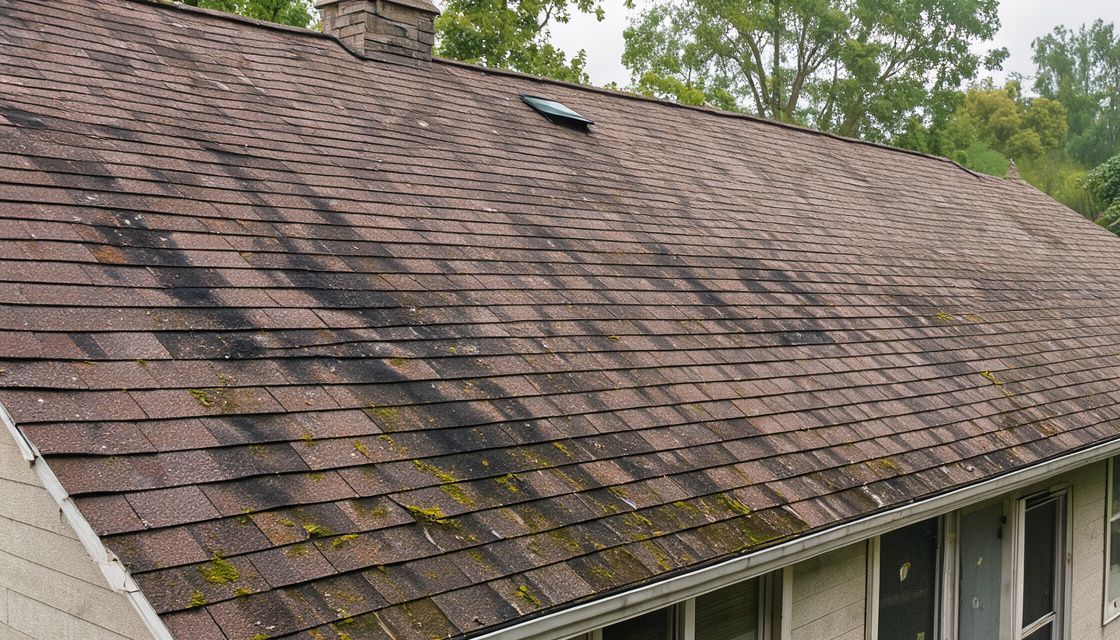
Owens Corning lists curled or cupped shingles, bald spots, cracked shingles, a roof at least 20 years old, and neighbors getting new roofs among the signs a roof may need replacing. ARMA adds that widespread shingle loss may indicate a need for reroofing.
Not sure where your roof stands? Answer five questions about what you can see.
Is it time to replace your roof?
Five questions about what you can see from the ground, in the attic and on paper. The result is a pointer, not a diagnosis.
- How old is your roof?
- How much of the roof shows missing, cracked or broken shingles or tiles?
- What do the shingles look like across the slopes?
- What does the attic show?
- If you have a repair quote, how does it compare with a new roof?
Typical lifespan by material
| Roof type | Lifespan (HomeGuide) |
|---|---|
| Asphalt 3-tab shingles | 15 to 20 years |
| Architectural shingles | 20 to 30 years |
| Wood shakes | 25 to 30 years |
| Metal | 30 to 80+ years |
| Tile | 30 to 100+ years |
| Slate | 50 to 200+ years |
Repair or replace
HomeGuide's rule of thumb is to consider repairing instead of replacing when less than 25% of the roof is damaged, repairs cost less than 30% of a new roof, and the roof is less than 20 years old. Outside those limits, replacement usually deserves a quote.
Lenders care too. HomeGuide notes that many mortgage lenders require at least 3 years of useful life left in the roof. If you are heading toward replacement, you can estimate your budget with the roof cost calculator before you collect quotes.
Roof size drives both inspection and replacement prices. Estimate your roof area here first.
Roof area from your house footprint
Geometry only: footprint plus overhangs, multiplied by the slope factor of the pitch (square root of 1 + (rise / 12) squared). Dormers, valleys and waste are not included.
Questions to ask before you hire an inspector
- Are you certified by InterNACHI or NRCIA, and how long have you inspected roofs?
- Will you walk the roof, fly a drone or both? Do you offer infrared scans?
- Do you inspect the attic as part of the visit?
- Will the written report include photographs and a list of urgent items?
- Do you also sell repairs or replacements?
- Can I see a copy of your insurance?
HomeGuide advises never paying in full upfront and making the final payment when you receive the report.
Printable roof inspection checklist
Print this, take it outside, then into the attic. Date each pass and keep it with your photos.
Outside
Inside
Frequently asked questions
How much does a roof inspection cost?
HomeGuide puts a roof inspection at $100 to $400 on average, with a national average of $280. A drone inspection runs $100 to $450 and an infrared scan $400 to $600, according to the same guide. Adding a roof certification costs $75 to $200.
How often should I inspect my roof?
NRCA recommends scheduled inspections at least twice a year, preferably in spring and fall, plus extra checks after severe weather such as hail, a hurricane or a tornado. HomeGuide also suggests a professional inspection every 3 years for a shingle roof and every 5 years for a tile roof.
Can I inspect my own roof?
Yes, from the ground, from a ladder at the eaves and from the attic. NRCA and ARMA both advise homeowners not to walk on the roof. Owens Corning notes that an insurance claim, a warranty claim or a real estate sale requires an inspection by a professional.
What does a roof inspector look for?
Owens Corning says an inspector checks the deck and framing, the surface materials and flashing, and the attic and crawl spaces. That includes curled or cracked shingles, granule loss, damaged flashing, chimney and skylight seals, vent seals, the ice and water barrier, and wet or thin attic insulation. The inspector also judges workmanship, such as nailing and shingle placement.
How long does a roof inspection take?
HomeGuide says a professional roof inspection takes 45 minutes to several hours, depending on roof size and the extent of the damage. The written report usually follows 1 to 2 days later.
Does a home inspection include the roof?
Usually, but in a limited way. HomeGuide says a home inspection costs $250 to $400 and includes a limited visual or a full physical examination of the roof covering. Owens Corning notes that home inspectors are often generalists and recommends a separate roof inspection before you buy.
Is a ceiling stain always a roof leak?
No. IKO notes that stains can come from an old resolved leak, an active roof leak, attic condensation, or plumbing and appliances on the floor above. Check for plumbing over the stain and for attic moisture before you call a roofer.
Sources
- NRCA (Professional Roofing), professionalroofing.net/articles/article/4787 (read November 22, 2026)
- NRCA (Professional Roofing), professionalroofing.net/articles/article/2338 (read November 22, 2026)
- NRCA (Professional Roofing), professionalroofing.net/articles/article/1726 (read November 22, 2026)
- Professional Roofing (NRCA), professionalroofing.net/articles/article/3547 (read November 22, 2026)
- OSHA, osha.gov/sites/default/files/publications/portable_ladder_qc.pdf (read November 22, 2026)
- ARMA, asphaltroofing.org/readying-your-roof-for-extreme-weather-events/ (read November 22, 2026)
- ARMA, asphaltroofing.org/spring-roof-inspection-a-must-for-property-owners/ (read November 22, 2026)
- ARMA, asphaltroofing.org/wp-content/uploads/2017/05/ARMA-MAT-Release-Let-the-Attic-Breathe.pdf (read November 22, 2026)
- ARMA, asphaltroofing.org/algae-discoloration/ (read November 22, 2026)
- ARMA, asphaltroofing.org/reroofing-replacement-vs-recover/ (read November 22, 2026)
- IIBEC, iibec.org/attic-ventilation-101/ (read November 22, 2026)
- ENERGY STAR, energystar.gov/saveathome/seal_insulate/do-it-yourself-guide/adding-attic-insulation (read November 22, 2026)
- ENERGY STAR, energystar.gov/saveathome/seal_insulate/identify-problems-you-want-fix/diy-checks-inspections (read November 22, 2026)
- Owens Corning, owenscorning.com/en-us/roofing/blog/roof-inspection (read November 22, 2026)
- Owens Corning, owenscorning.com/en-us/roofing/blog/do-i-need-a-new-roof (read November 22, 2026)
- IKO, iko.com/na/blog/how-to-know-if-you-need-a-new-roof/ (read November 22, 2026)
- IBHS, ibhs.org/is-it-hail-damage/ (read November 22, 2026)
- IBHS, ibhs.org/roof-roadmaps-copy/ (read November 22, 2026)
- Eagle Roofing Products, eagleroofing.com/?p=21195 (read November 22, 2026)
- Eagle Roofing Products, eagleroofing.com/?p=19484 (read November 22, 2026)
- Facilitiesnet, facilitiesnet.com/roofing/article/Maintenance-Best-Practices-for-Metal-Roofing--9808 (read November 22, 2026)
- Oklahoma State University Extension, extension.okstate.edu/fact-sheets/minimizing-stormwater-runoff-by-disconnecting-residential-downspouts (read November 22, 2026)
- HomeGuide, homeguide.com/costs/roof-inspection-cost (read November 22, 2026)
- HomeGuide, homeguide.com/costs/roof-replacement-cost (read November 22, 2026)
- HomeGuide, homeguide.com/costs/roof-flashing-repair-cost (read November 22, 2026)
- HomeGuide, homeguide.com/costs/roof-repair-cost (read November 22, 2026)
- HomeGuide, homeguide.com/costs/roof-vent-repair-cost (read November 22, 2026)
- Connecticut Insurance Department, portal.ct.gov/cid/knowledge-base/articles/winter-insurance-claim-tips (read November 22, 2026)
- Texas Department of Insurance, tdi.texas.gov/tips/after-hail-or-windstorms.html (read November 22, 2026)
- Oklahoma Insurance Department, oid.ok.gov/bulletin-4-2022/ (read November 22, 2026)
- National Weather Service, weather.gov/bmx/outreach_svr (read November 22, 2026)
- NOAA NSSL, nssl.noaa.gov/education/svrwx101/hail/ (read November 22, 2026)
- Ready.gov (FEMA), ready.gov/hurricanes (read November 22, 2026)
- HomeGuide, homeguide.com/costs/roof-leak-repair-cost (read November 22, 2026)
- IKO, iko.com/na/blog/roof-maintenance-tips-for-homeowners/ (read November 22, 2026)
- ARMA, asphaltroofing.org/assessing-roof-damage-after-superstorm-sandy/ (read November 22, 2026)