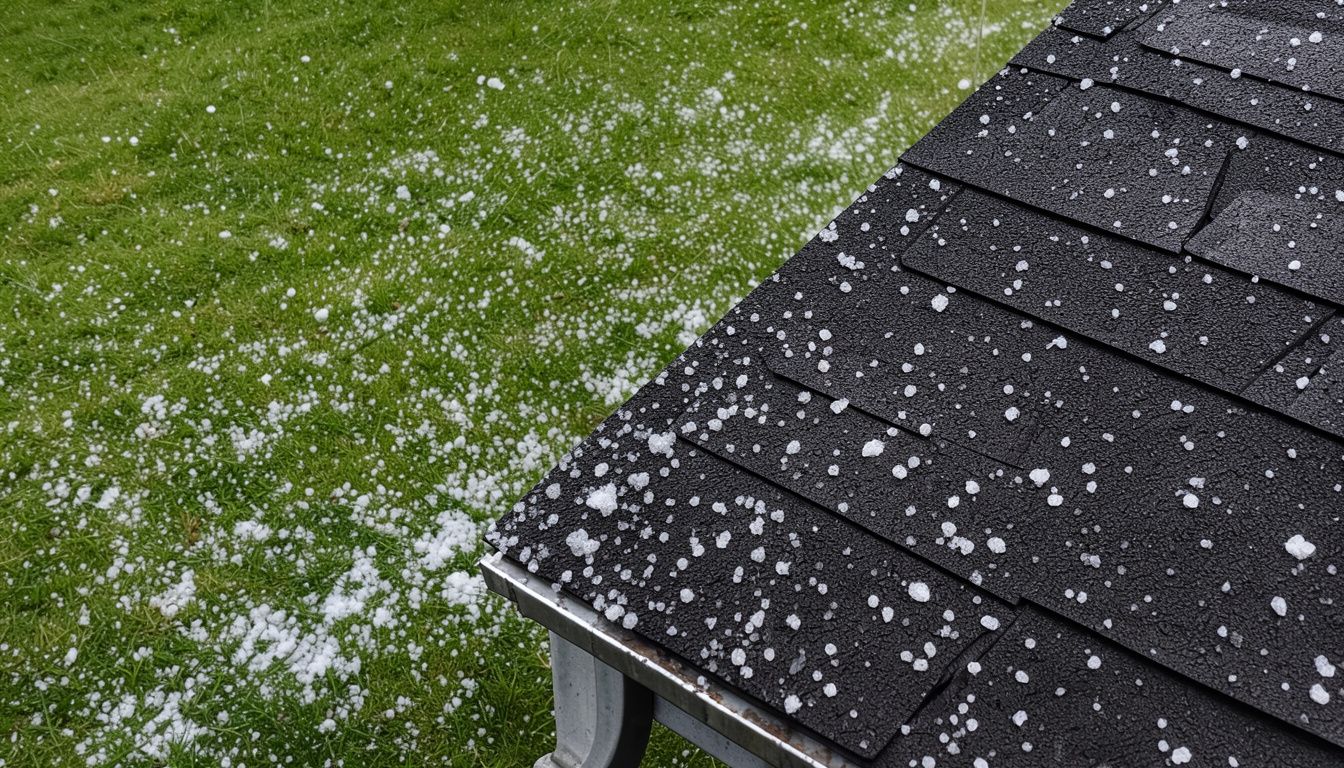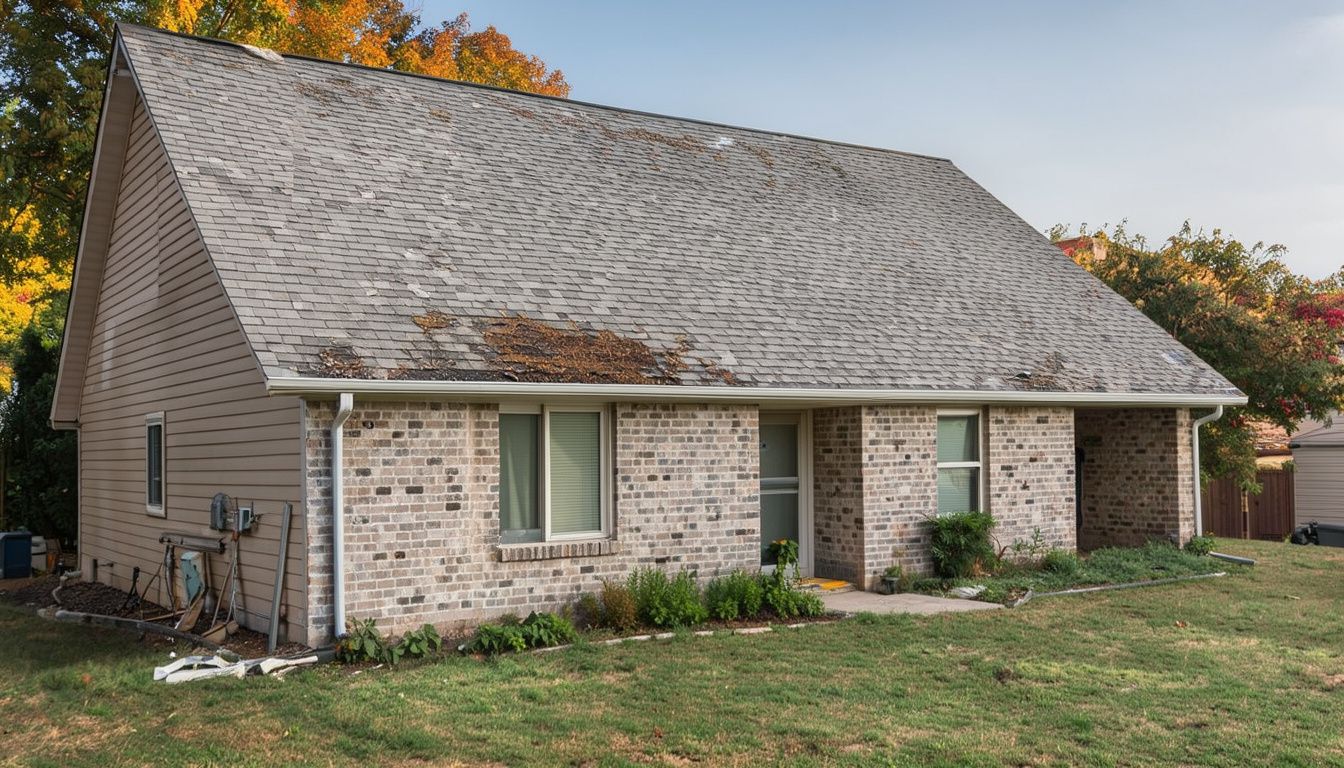
Roof leaks after rain almost always come from a weak spot that was already there: a cracked pipe boot, loose flashing, a clogged valley, or shingles whose seal has let go. Heavy or wind-driven rain simply delivers enough water, at the right angle, to find it. The drip on your ceiling is often several feet from the real opening, so the fix starts with tracing the water, not patching the stain.
Why a Roof Leaks Only in Heavy or Wind-Driven Rain
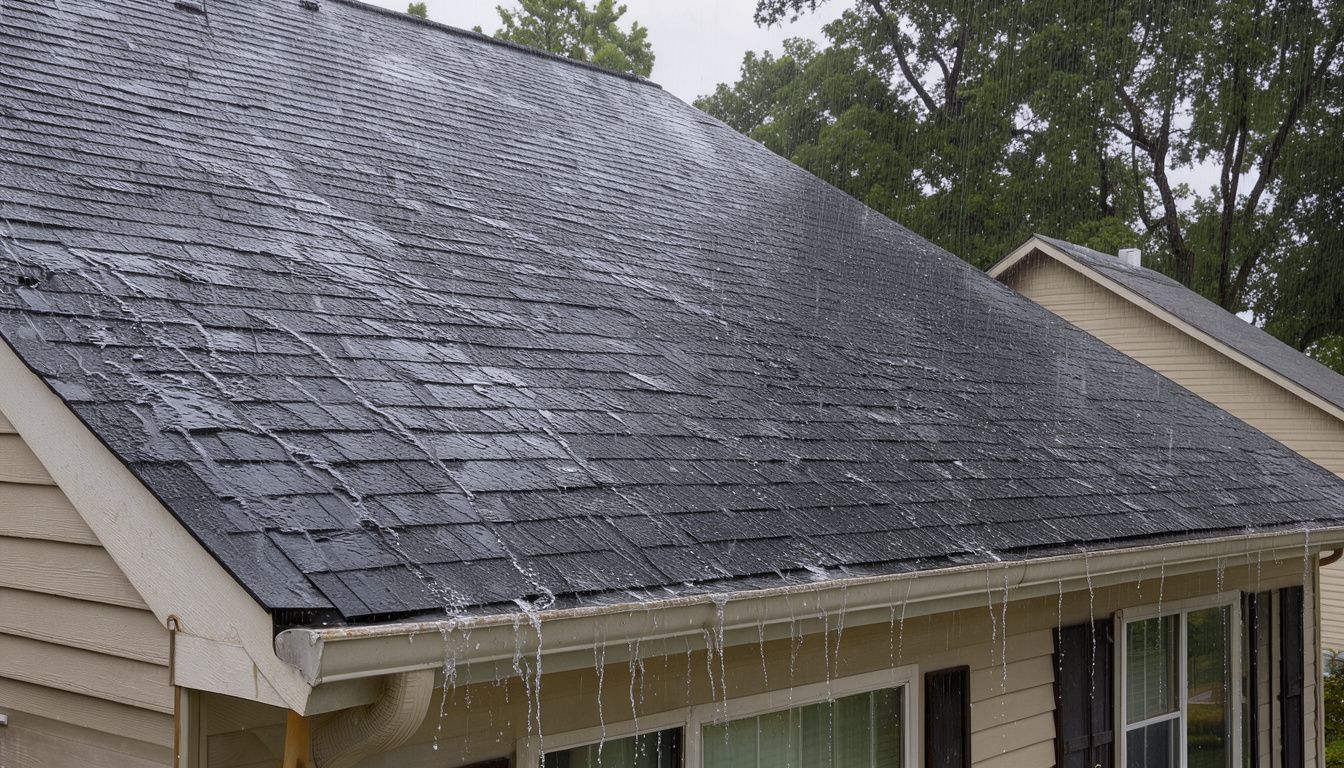
A roof that stays dry in a light shower and drips in a downpour is telling you something specific. The defect is small enough that ordinary rain runs past it, but it opens up when volume, wind, or backed-up water changes how the water moves.
More water than the weak spot can shed
The U.S. Department of Energy's Building Science Education program notes that heavy rains can pour thousands of gallons of water onto a home's roof in a single storm. The same guidance notes that where roofs intersect walls, much of this water is channeled off the roof and into gutters, and that if sidewall flashing is lacking or inadequate, water can leak into the wall.
Wind pushes water sideways and uphill
Shingles are designed to shed water that runs downhill. Wind changes the direction. The IBHS FORTIFIED program explains that wind can drive rain almost sideways, allowing it to enter through attic vents that are not designed to prevent it. IBHS testing also shows that wind-driven rain can be blown up under roof overhangs and into soffits.
A leak that appears only when storms come from one direction is a strong hint that the entry point is on the windward side of the house, even if the stain shows up somewhere else.
Aging shingle sealant lets tabs lift
Asphalt shingles rely on a strip of heat-activated sealant to hold each tab down. IBHS reports that after 7-10 years, the sealant weakens enough to significantly reduce the shingle's ability to resist wind pressure, and some tabs may even become unsealed. An unsealed tab can lift in a gust and let rain blow under it, then settle back down so the roof looks normal from the yard.
Backed-up water at the eaves and valleys
When gutters, downspouts, or valleys clog, water has nowhere to go and starts to pond against the bottom courses of shingles. In winter, the same thing happens behind an ice dam.
Where Rainwater Usually Gets In
The Asphalt Roofing Manufacturers Association (ARMA) points out that leaks can occur where roofs meet sidewalls and around penetrations such as skylights, vent pipes and chimneys. This Old House lists the same hot spots, plus valleys and damaged shingles. Here is how each one fails and what it looks like.
Pipe boots and vent collars
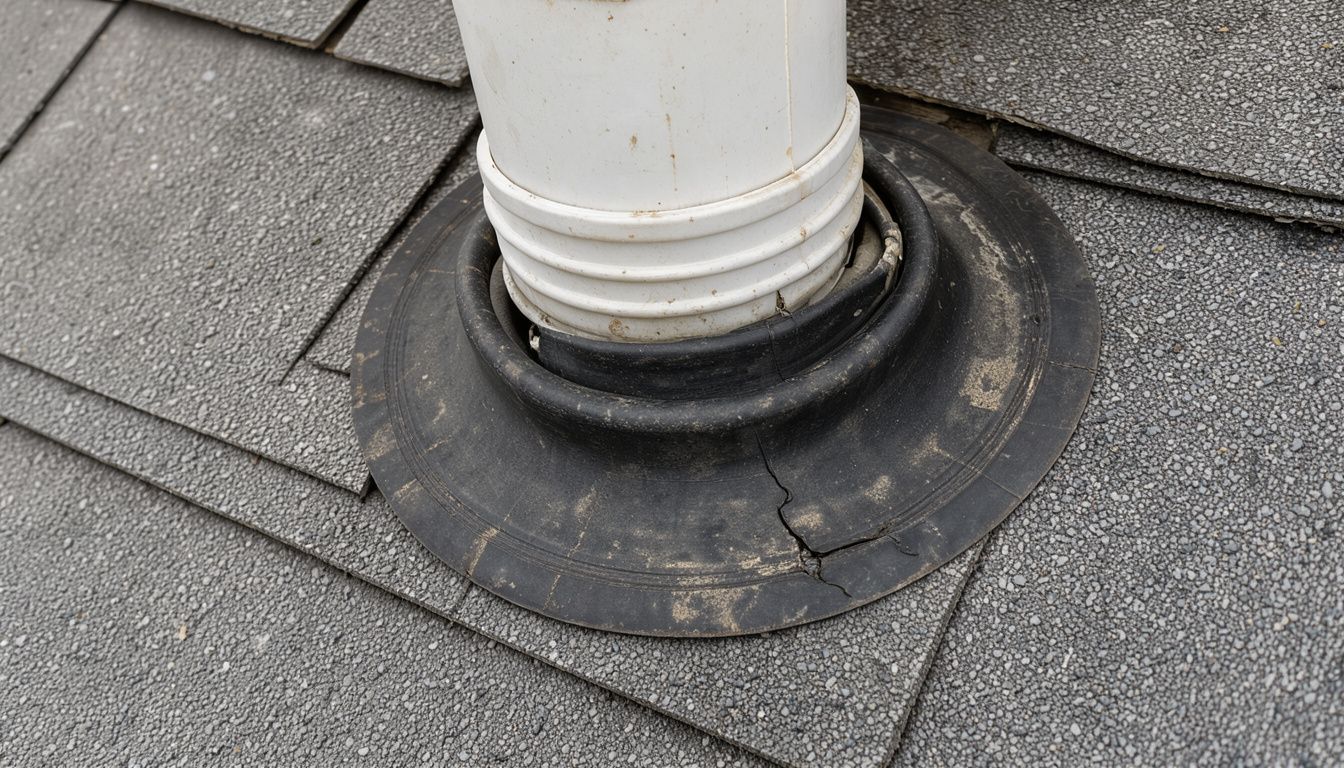
Plumbing vent pipes pass through the roof inside a rubber or plastic boot. The rubber dries out in the sun, splits, and lets water run down the outside of the pipe into the attic. Water from a failed boot often shows up as a ceiling stain near a bathroom or kitchen, because that is where the plumbing vents are.
Gas appliance vents use a metal collar instead. HomeGuide notes that heavy rain may get past the metal collar and run down the pipe if it's not securely attached, which is a classic heavy-rain-only leak.
Step flashing and roof-to-wall joints
Wherever a roof slope runs into a wall, such as a dormer or a second-story wall above a porch, small L-shaped pieces of metal called step flashing are woven into each course of shingles. The DOE guidance says step flashing should extend at least 4 inches up the wall from the roof deck and at least four inches out along the roof deck. This Old House adds that the pieces are typically 5-by-7-inch rectangles, and that a single continuous strip along the wall is the wrong way to do it.
When step flashing is missing, rusted, or tucked behind the siding incorrectly, water runs into the wall cavity. State Farm notes that water spots on the walls often point to issues with the step flashing where the exterior wall meets the roof.
Chimneys
A chimney has several ways to leak: the flashing at its base, the counterflashing set into the mortar joints, the crown on top, and the cap. HomeGuide lists cracked crowns, deteriorated flashing, and poorly sealed joints as the usual causes. Wide chimneys also collect water on their uphill side, which is why many have a small diverter called a cricket behind them.
Chimney leaks tend to show up as stains on the ceiling or wall right next to the chimney, or as damp masonry inside the attic.
Skylights
HomeGuide notes that skylight leaks typically happen when the seals or flashing around the skylight fail, though a storm can also break the glass. A skylight leak can be confused with condensation on the glass, so check whether drips appear only during rain or also on cold, dry mornings.
Valleys
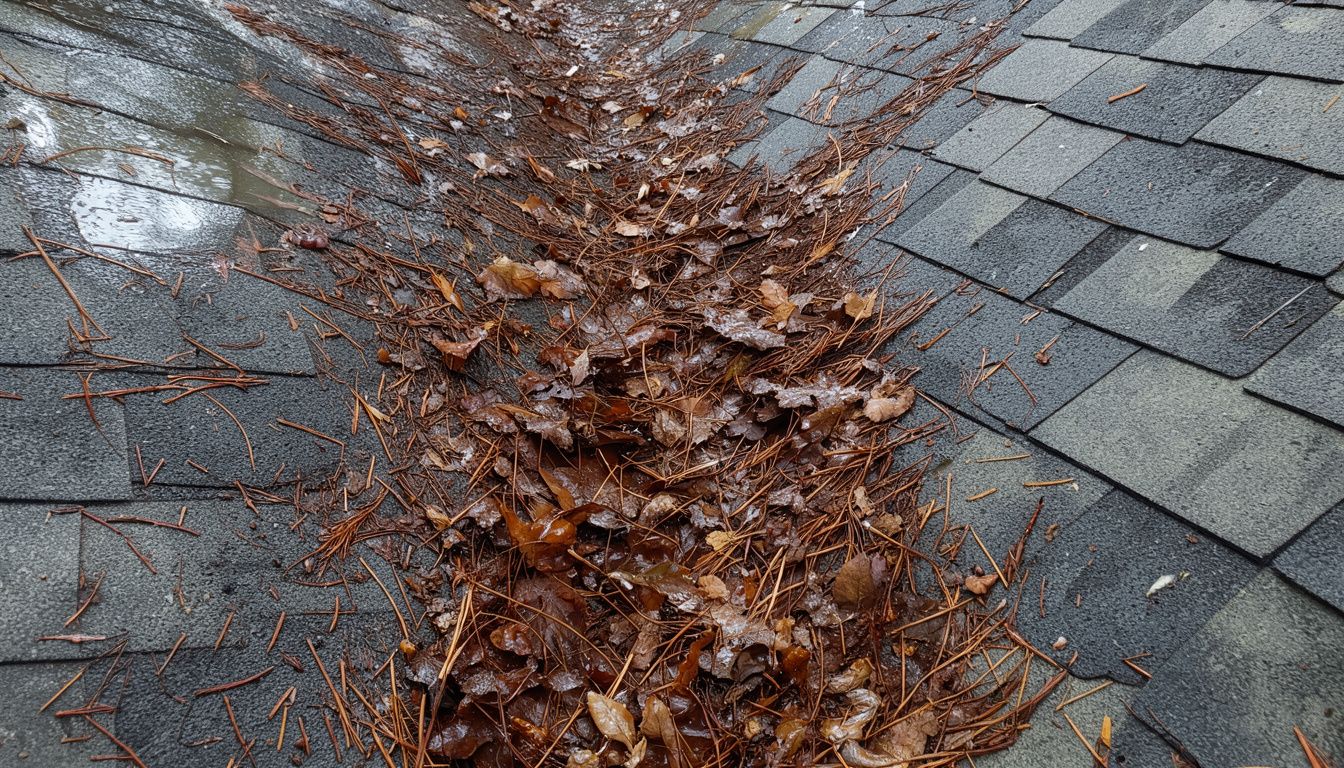
A valley is the trough where two roof planes meet. It carries the runoff from both slopes, so it sees more water than almost any other part of the roof. ARMA notes that ice and water barriers are used in valleys, around chimneys, and at other protrusions for exactly that reason. Leaves and pine needles that pile up in a valley slow the flow and push water sideways under the shingle edges.
Missing, lifted, or cracked shingles
A missing shingle exposes the underlayment, which ARMA describes as a secondary water barrier, not the main one. HomeGuide notes that roofing felt lasts 15 to 30 years, and leaks occur when it is worn out. One lost shingle on an older roof can therefore leak much faster than the same gap on a new one.
IBHS also warns that once one shingle tab fails in wind, it can start a cascade that rips off the shingles around it.
Nail pops and old nail holes
HomeGuide explains that the nails holding down shingles loosen over time or prematurely due to improper installation or severe weather, creating gaps for water to seep in. State Farm also lists holes left by removed satellite dishes. This Old House warns that water can enter through small nail holes for years before you notice.
HomeGuide adds that nail pops may indicate more serious roofing problems, so a roofer who finds several should look at the whole roof.
Clogged gutters and downspouts
State Farm suggests checking whether sections are drooping and whether the gutter overflows when it rains, and ARMA recommends keeping gutters and valleys clear of leaves, branches, or litter.
Attic vents and soffits
Box vents, turbine vents, and ridge vents all have openings by design. IBHS FORTIFIED notes that wind can drive rain almost sideways into vents that are not designed to prevent it, which is why the FORTIFIED standard requires attic vents that are wind and rain resistant. A leak that shows up near the ridge or near a vent only during a windy storm fits this pattern.
Ice dams in winter
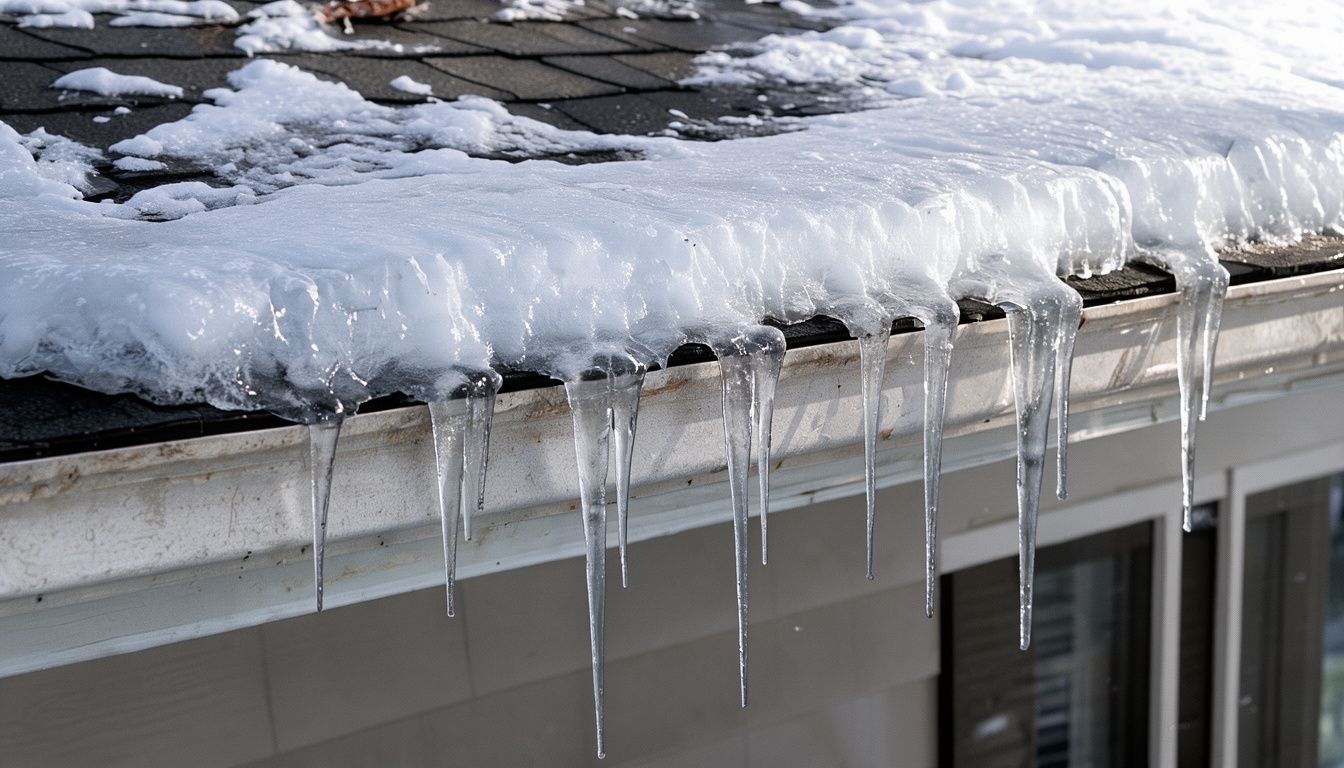
ARMA explains that ice dams are typically formed by the repeated thawing and freezing of melting snow or the backing up of frozen slush in gutters. When they form, water can be forced under the roofing and damage ceilings, walls, insulation, and framing. The leak often shows up during a thaw or a winter rain, along exterior walls.
The building codes respond with an ice barrier at the eaves in areas with a history of ice dams. ARMA recommends extending it a minimum of 24 inches inside the interior wall line. Fine Homebuilding points out that the common practice of laying a single 3-foot roll often falls short of the code, and that in heavy-snow winters water can pond behind the dams and reach higher than 36 in.
Condensation that looks like a leak
Not every drip in the attic is rain. GreenBuildingAdvisor explains that condensation needs only water vapor in the air and a surface cold enough, and that the real source of the vapor is the indoor air leaking up from the living space. In cold weather, frost collects on the tips of roofing nails, then melts.
InspectAPedia describes how that frost later melts off the nails and drips onto the floor below, with a drip pattern that can match the pattern of shingle nails. This Old House also notes that condensation causes damp walls, foggy windows, buckled ceiling materials, and musty odors, and that broken pipes or HVAC leaks are other possible culprits.
Leak Source, Where the Water Shows Up, and the Typical Fix
Use this table to connect what you see inside with the most likely entry point outside. It is a starting point for a conversation with a roofer, not a diagnosis.
| Likely source | Where water usually shows up | Typical fix |
|---|---|---|
| Cracked pipe boot | Ceiling stain near a bathroom or kitchen; wet wood around the vent pipe in the attic | Replace the boot or add a retrofit collar; reseal surrounding shingles |
| Loose gas vent collar | Water running down the pipe; stain around a furnace or water heater flue | Re-secure or replace the metal collar and flashing |
| Step flashing at a wall | Spots on an interior wall below a roof-to-wall joint; damp sheathing at the wall line | Lift shingles and siding, replace the step flashing piece by piece |
| Chimney flashing or crown | Stain on the ceiling or wall next to the chimney; damp masonry in the attic | Reflash, repair or replace the crown, add a cap or cricket |
| Skylight seal or flashing | Drips around the skylight frame or well | Reflash the curb; replace the unit if the frame or glass has failed |
| Valley | Stain below the low point where two slopes meet | Clear debris; remove and reinstall valley flashing and shingles |
| Missing or unsealed shingles | Stain in the middle of a ceiling, often after a windy storm | Replace and seal the shingles; check the underlayment beneath |
| Nail pops or old holes | Small, scattered drips; rusty nail tips in the attic | Re-nail and seal; patch abandoned holes with flashing under the shingle |
| Clogged gutters | Stains along exterior walls, soffit or fascia rot | Clean gutters and downspouts; repair sagging sections |
| Ice dam | Stains along exterior walls during a thaw or winter rain | Remove the dam; add ice barrier, air sealing, and insulation |
| Attic condensation | Widespread damp sheathing, frost or rust on nail tips, drips on cold days without rain | Air seal the ceiling, vent fans outdoors, improve attic ventilation |
Where is your leak coming from?
Answer five questions about what you can see from inside and from the ground. The result points you to the part of this guide that fits your situation.
- When does the water show up?
- Where is the stain or drip?
- What do you see in the attic?
- What do you see from the ground with binoculars?
- How old is the roof?
What to Do in the First Hours, From Inside
The goal in the first hours is to limit damage and stay safe. Every step below happens inside the house. ARMA is direct about this: homeowners should not climb onto their roofs.
Check for electricity and sagging ceilings first
If water is coming through a light fixture, a ceiling fan, or near outlets, turn off power to that area at the breaker if you can reach the panel without standing in water. The American Red Cross warns not to touch electrical equipment if it is wet or if you are standing in water because you could be electrocuted.
A ceiling that bulges or sags is holding water and can come down. Keep people and pets out of the room and call a roofer or restoration company right away.
Contain the water and protect your belongings
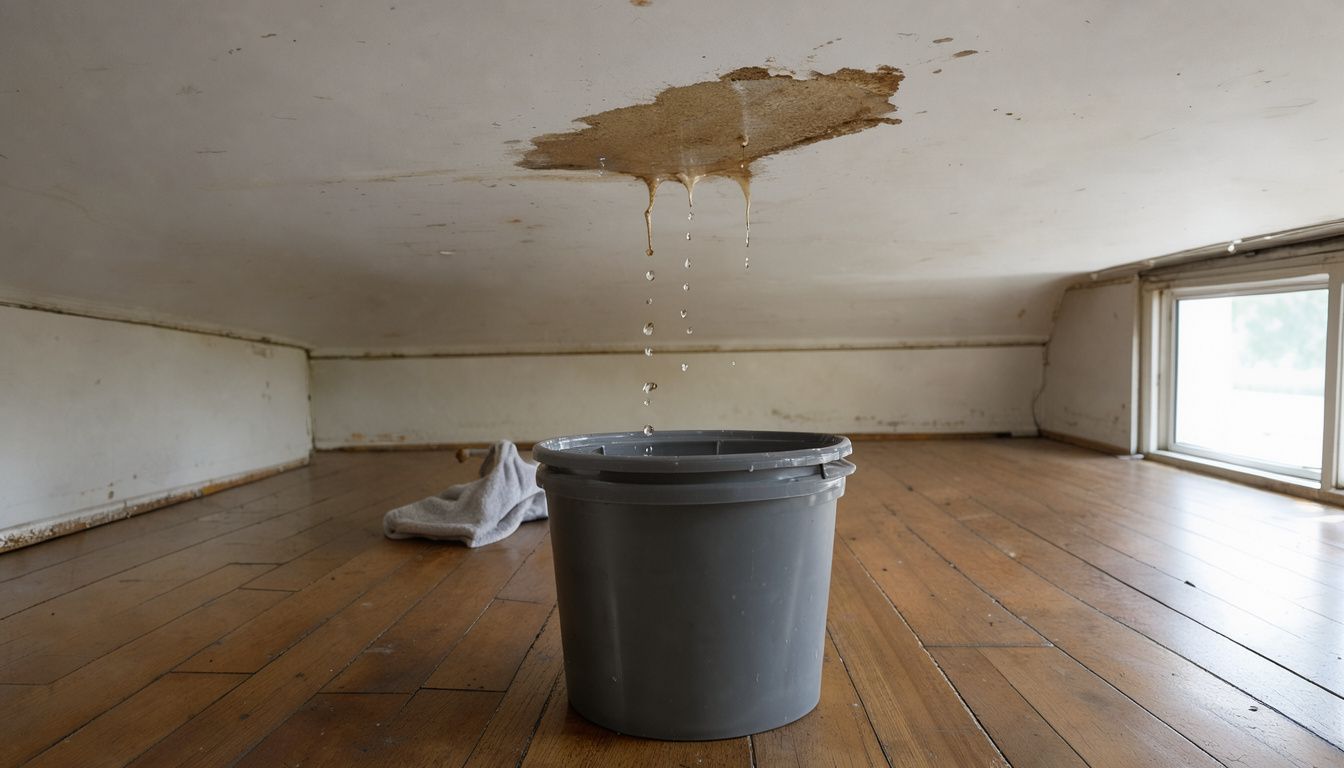
State Farm recommends moving valuables and furniture away from the wet area and using buckets, bowls, or any container to catch drips. Lay towels or a plastic sheet under the drip to keep water from spreading across the floor.
Document everything
State Farm also suggests taking notes and pictures of the leak and any damage. Photograph the ceiling, the containers, wet items, and the date. If the leak follows a storm, those photos may matter for an insurance claim later.
Leave tarping to a professional
A wet roof is slippery, and the leak often sits on a steep or high slope. The National Roofing Contractors Association (NRCA) encourages homeowners to assess roof damage from ground level and not attempt repairs on their own. This Old House contractor Tom Silva points out that a third of construction fatalities happen from people falling off of roofs.
HomeGuide puts an emergency roof tarp at $1.00 to $2.80 per square foot for after-hours service, which often includes photos for insurance and a repair estimate.
How to Trace a Roof Leak From the Attic
If you have an accessible attic, it is the safest and most useful place to look. You are trying to find where water first touches the wood, then follow it back uphill.
- Go up during or right after the rain. ARMA notes that a flashlight in the attic during a rainstorm can reveal active leaks on the underside of the roof deck.
- Move safely. This Old House recommends a headlamp and stepping only on secure structural framing.
- Start above the stain and work uphill. Check every rafter, especially where two roof planes meet, and follow any water trail upslope.
- Mark the highest wet point. This Old House suggests gently pushing a small nail up through the leaking gap so it can be found from outside.
- Write it down for the roofer. Note the distance from a vent pipe or gable wall, the date, and the storm direction.
Look during or right after the rain
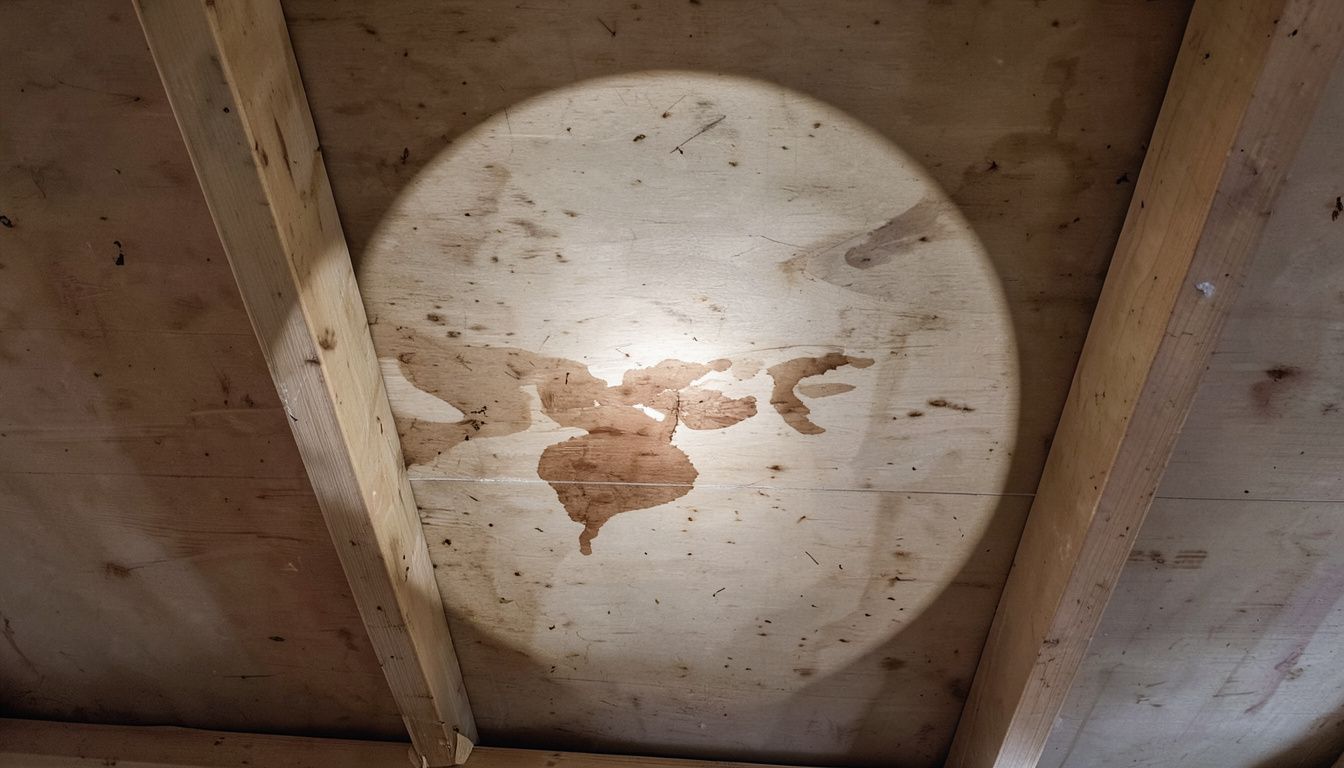
ARMA notes that active leaks on the underside of the roof deck can be revealed by shining a flashlight into the attic during a rainstorm. Wet wood glistens under a strong light, and fresh drips are easier to follow than old stains.
This Old House recommends a headlamp and stepping only on secure structural framing. Never put your weight on the drywall between joists.
Follow the water uphill
Start above the ceiling stain and work upslope. This Old House reminds readers that the leak likely originates higher up, so follow any signs of water uphill. It also advises checking for moisture at every rafter, especially where two roof planes meet.
Look for dark streaks on rafters, water trails on the sheathing, wet or matted insulation, and daylight around pipes or vents. Water can ride along a rafter, a pipe, or a wire for several feet before it drips.
Mark the spot
Once you find a wet hole or the highest point of a trail, This Old House suggests gently pushing a small nail up through the leaking gap so it can be found from outside later. Measure the distance from a fixed point, such as a vent pipe or the gable wall, and write it down for the roofer.
Leak or condensation: a quick test
Roof leak
Stains are usually larger and run down the sides of rafters and across the sheathing, according to InspectAPedia. Drips follow rain.
Attic condensation
Frost later melts off the nails and drips, with a pattern that can match the shingle nails. The vapor comes from indoor air, says GreenBuildingAdvisor.
InspectAPedia notes that stains from roof leaks are usually larger and appear on the sides of rafters and on larger areas of the sheathing. Condensation tends to leave rings around many nail tips and small drip marks spread across the attic floor.
No attic access?
Cathedral ceilings and finished attics hide the roof deck. In that case, note exactly where and when the water appears, which wind direction the storm came from, and whether it shows up only in long, heavy rains. That pattern narrows the search for a roofer.
How Roofers Find Leaks
Finding the entry point is often the hardest and most important part of the job. HomeGuide notes that a professional roof inspection costs $100 to $400 on average for the roofer to check the whole roof system and locate the leak entry points.
Inspection from the ground, ladder, and attic
A roofer typically starts with the attic evidence, then checks the matching area outside: flashing, boots, valleys, and shingle condition. State Farm suggests that even if you think you know where water is entering, a roofing specialist should confirm the specific source.
From the ground, you can help by scanning the roof with binoculars, which State Farm also recommends, and noting missing, curling, or cracked shingles.
Water testing with a hose
When the source is not obvious, a controlled water test recreates the rain. This Old House describes the method: one person soaks the suspect area with a garden hose, starting on the lower part of the roof and working up, while a helper inside watches for new drips. It advises spending several minutes at each location before moving on.
Starting low matters. If you soak the top of the roof first, water runs down over every lower detail and you cannot tell which one let it in. This is a job for a roofer on the roof and you in the attic, not the other way around.
Opening up the roof
If testing points to an area, the roofer may lift or remove shingles there. This Old House suggests looking for discolored paper, water stains, or rotted wood on the decking below. That also shows how far the damage has spread.
Moisture meters, infrared, and electronic testing
Some roofers and consultants use moisture meters or infrared cameras to find wet areas without tearing into the roof. On flat and low-slope membrane roofs, electronic leak detection is also used. Intertek describes flood testing and infrared surveys as traditional methods that can be time-consuming and disruptive, and notes that electronic tests can often be completed in a matter of hours, while flood tests can take days or even weeks.
Why a Newly Covered Roof Can Leak
A leak right after a new roof is frustrating, but the causes are usually specific and fixable under the contractor's workmanship warranty.
Shingles have not sealed yet. IBHS notes that manufacturers recommend temperatures between 70°F and 80°F for sealing, and that temperatures below 40°F may not allow shingles to seal properly. A roof can seal in one to two weeks in summer, but it can take one to two months or more in cooler weather. Until then, wind-driven rain can get under the tabs.
Flashing details were done wrong. Step flashing at walls has to be woven in piece by piece. This Old House specifically warns that if a roofer wants to put a single continuous piece of flashing up the side of the roof, you should not have them do the job.
Penetrations were missed. Pipe boots, gas vent collars, and attic vents all have to be reset or replaced. One unsealed boot is enough to cause a ceiling stain.
Call the installer first and document the leak with photos and dates. This Old House notes that attempting your own repairs could void the roof's warranty.
Repair or Replace: What Decides the Fix
State Farm sums it up: newer roofs may simply require repair, while older roofs may require replacement. HomeGuide gives a more concrete rule of thumb.
| Lean toward repair when | Lean toward replacement when |
|---|---|
| Less than 25% of the roof is damaged | The damage affects more than 25% of the roof |
| The roof is less than 20 years old | The roof is more than 20 years old |
| Repairs cost less than 30% of a new roof | The repair estimate is more than $3,000 |
| The leak comes from one detail, such as a boot or a flashing piece | Shingle loss or damage is widespread, which ARMA says may indicate a need for reroofing |
HomeGuide notes that a new asphalt shingle roof lasts 15 to 30 years. A single leak at a pipe boot on a ten-year-old roof is a repair. Repeated leaks in different spots on a roof near the end of that range usually are not.
Deck condition also matters. Soft, rotted, or delaminated sheathing has to be replaced whatever you decide, and HomeGuide notes that neglected leaks often lead to wood rot and extensive water damage to both the roof and the interior.
What Roof Leak Repairs Cost
HomeGuide puts a small roof leak repair at $150 to $1,000 for simple fixes like resealing a vent or replacing a few shingles, and $1,000 to $6,000+ for larger leaks with water damage. This Old House, using Angi data, puts most leak repairs between $360 and $1,550, with an average around $1,100. To compare these numbers with a full replacement for your house, try our roof replacement cost calculator.
Cost by leak source
| Leak source or repair | Typical cost range (HomeGuide) |
|---|---|
| Missing shingles (up to 25 asphalt shingles) | $100 to $300 |
| Roof vent leak (reseal or reflash) | $100 to $500 |
| Vent boot repair | $75 to $150 |
| Cracked pipe boot replacement | $250 to $600, up to $1,500+ |
| Metal gas vent collar | $400 to $1,500+ |
| Nail pops (small area) | $200 to $500 |
| Leaking valley | $300 to $1,500 |
| Skylight leak | $225 to $800 |
| Chimney flashing | $200 to $1,000 |
| Chimney crown (small cracks) | $150 to $700 |
| Dormer flashing | $250 to $1,000 |
| Ice dam removal | $350 to $1,500 |
| Ice dam leak repair and restoration | $1,500 to $5,000+ |
Costs that grow when a leak is left alone
The repair itself is often the small part of the bill. HomeGuide lists these add-ons:
- Roof decking or sheathing: $2 to $5 per square foot.
- Underlayment replacement: $0.75 to $4.00 per square foot.
- Wet insulation replacement: $100 to $450 per 100 square feet.
- Mold remediation: $1,500 to $6,000 on average, up to $15,000 if the whole attic is affected.
- Full skylight replacement if the unit has failed: $800 to $2,400.
What drives the price
HomeGuide notes that labor often accounts for 60% or more of a leak repair, with roofers charging $40 to $100 per hour. HomeGuide also lists a typical minimum call-out fee of $150 to $300, and emergency work adds $200 to $300. Steep pitch, multiple stories, and hard-to-reach details all add time.
The job itself is usually short. HomeGuide says most leak repairs take 30 minutes to a full day, unless structural damage needs to be fixed.
Does Homeowners Insurance Cover a Rain Leak?
Coverage depends on why the roof leaked, not on the leak itself. The Hartford explains that homeowners insurance generally covers roof leaks caused by a covered loss that is sudden and accidental, such as wind or a fallen tree, while damage from general wear and tear typically is not covered. It also notes that some policies have windstorm and hail exclusions.
HomeGuide adds that if roof damage is left unrepaired, insurance likely won't cover later problems like wood rot and mold. That is one more reason to act quickly and keep your photos.
On a covered roof claim, The Hartford says the insurer typically pays the actual cash value first, minus your deductible. If a repair estimate is below your deductible, paying out of pocket may make more sense than filing.
Maintenance That Keeps the Next Storm Outside
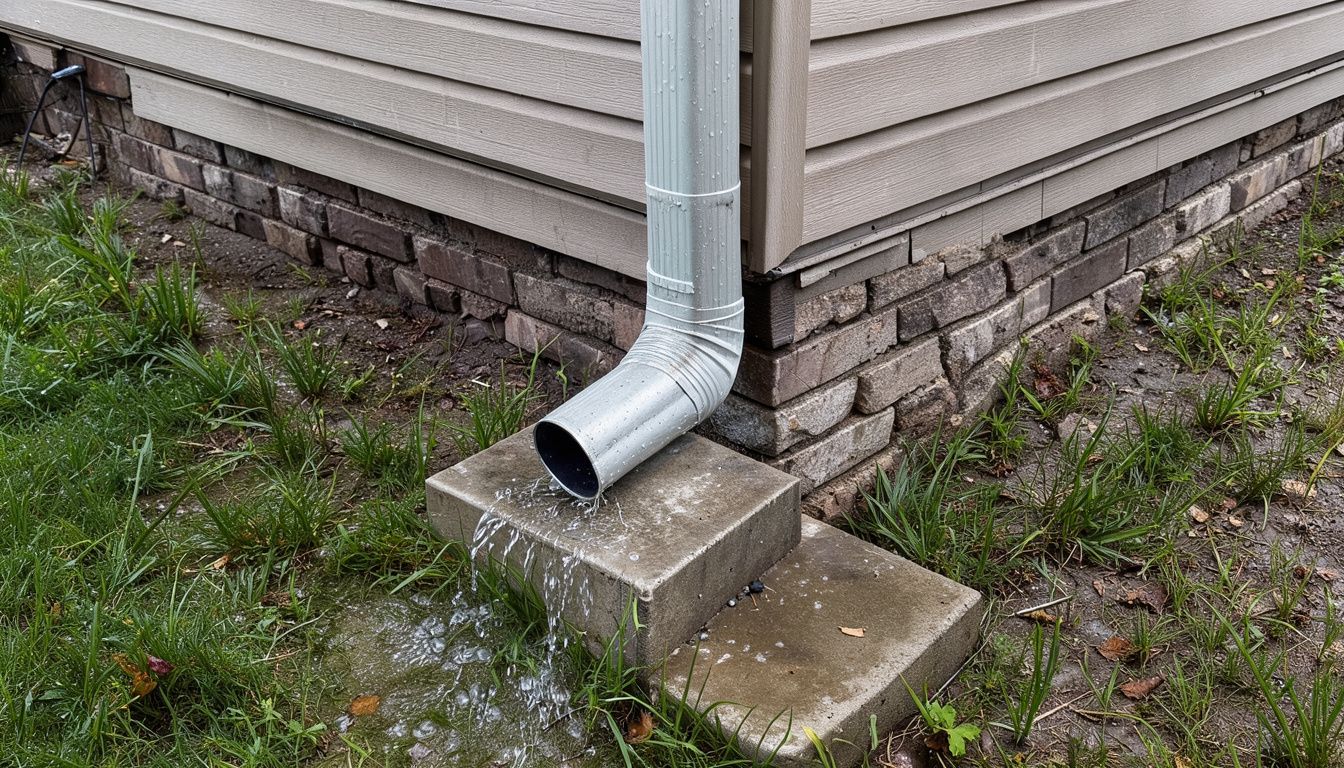
Most of the entry points above can be caught early with simple, ground-level habits and a periodic professional check.
- Look at the roof twice a year. This Old House suggests inspecting the roof and vent pipes at least twice a year, ideally in spring and fall. Use binoculars from the ground.
- Keep gutters and valleys clear. ARMA recommends cleaning gutters and valleys so they are not clogged with leaves, branches, or litter, and leaving roof work to professionals.
- Trim trees. ARMA also advises cutting back branches that scrape against or extend over the roof.
- Check the attic after big storms. A flashlight look at the sheathing after heavy rain finds leaks before they reach the ceiling.
- Control attic moisture. Vent bath and kitchen fans outdoors and seal air leaks in the ceiling. ARMA notes that keeping the attic cold with good insulation also reduces ice dams.
- Replace aging boots and sealant. Rubber pipe boots and caulked joints wear out before the shingles do.
Upgrades worth asking about at your next reroof
If you are replacing the roof anyway, a few details make rain leaks less likely. IBHS testing shows that once the shingles are gone, every inch of rain on an exposed deck can let in the equivalent of nine bathtubs of water, and that sealing the deck seams can cut that intrusion by up to 95%. Ask about a sealed roof deck, wind and rain resistant vents, and an ice barrier that meets the code width in cold climates.
How to Hire a Roofer for a Leak Repair
HomeGuide recommends getting at least 3 in-person estimates and being wary of anyone who pushes a full replacement without a thorough inspection. Ask for a written, itemized estimate and a warranty before work begins.
Useful questions to ask:
- Where exactly do you think the water is getting in, and how did you confirm it?
- Will you water test the area after the repair?
- Does the price include replacing wet decking or insulation if you find it?
- Does the repair need a permit, and will you pull it?
- What warranty do you give on the repair, and does it affect my roof's manufacturer warranty?
- Do you have experience documenting leak repairs for insurance claims?
Finally, HomeGuide is clear that all roof leaks should be repaired from the exterior to address the underlying cause. Caulk on the ceiling or a patch on the drywall hides the symptom until the next heavy rain.
Frequently asked questions
Why is my roof leaking after heavy rain but not light rain?
Heavy rain sends far more water through valleys and roof-to-wall joints, and wind can push it sideways under shingles and into vents. IBHS reports that after 7-10 years, shingle sealant weakens and some tabs can become unsealed, so they lift only in strong gusts. A small defect that sheds a light shower can be overwhelmed in a downpour.
Can a roof leak stop after the rain ends and still cause damage?
Yes. The drip stops, but wet sheathing, insulation, and framing stay damp. HomeGuide notes that neglected leaks often lead to wood rot and extensive water damage, and that insurance likely will not cover rot or mold from damage left unrepaired.
Why is rainwater leaking from a newly covered roof?
New shingles may not have sealed yet: IBHS says sealing can take one to two weeks in summer and one to two months or more in cooler weather. Missed pipe boots and poorly detailed step flashing are other possible causes. Call the installer first, since your own repairs could void the warranty.
How much does it cost to fix a roof leak after rain?
HomeGuide puts minor leak repairs at $150 to $1,000 and larger leaks with water damage at $1,000 to $6,000+. This Old House, using Angi data, puts most leak repairs between $360 and $1,550. Replacing wet decking, insulation, or mold adds to the bill.
Can I fix a roof leak from inside the attic?
You can catch water and mark the spot from inside, but HomeGuide says all roof leaks should be repaired from the exterior to address the underlying cause. Caulk or a drywall patch inside only hides the symptom until the next storm.
Does homeowners insurance cover a roof leak from rain?
It depends on the cause. The Hartford says policies generally cover leaks from a covered loss that is sudden and accidental, such as wind damage, but not damage from general wear and tear. Document the leak with photos and check your policy, since some policies exclude windstorm and hail.
How can I tell a roof leak from attic condensation?
Leak stains are usually larger and run down the sides of rafters and across the sheathing, according to InspectAPedia. Condensation leaves rust or frost on many nail tips and small drips spread across the attic, often on cold days without rain. Indoor moisture leaking into the attic is the usual cause.
Sources
- HomeGuide, homeguide.com/costs/roof-leak-repair-cost (read November 22, 2026)
- HomeGuide, homeguide.com/costs/roof-repair-cost (read November 22, 2026)
- HomeGuide, homeguide.com/costs/roof-flashing-repair-cost (read November 22, 2026)
- HomeGuide, homeguide.com/costs/roof-replacement-cost (read November 22, 2026)
- This Old House, thisoldhouse.com/roofing/how-to-find-a-roof-leak (read November 22, 2026)
- This Old House, thisoldhouse.com/roofing/how-to-fix-a-leaking-rooftop-vent-pipe (read November 22, 2026)
- ARMA, asphaltroofing.org/readying-your-roof-for-extreme-weather-events/ (read November 22, 2026)
- ARMA, asphaltroofing.org/preventing-damage-from-ice-dams/ (read November 22, 2026)
- ARMA, asphaltroofing.org/anatomy-asphalt-roofing-system/ (read November 22, 2026)
- Fine Homebuilding, finehomebuilding.com/2018/05/16/ice-barriers-explained-far-roof-slope (read November 22, 2026)
- NRCA, nrca.net/news-events/press-room/storm-roof-repairs (read November 22, 2026)
- IBHS FORTIFIED, fortifiedhome.org/roof/ (read November 22, 2026)
- IBHS, ibhs.org/risk-research/wind-driven-rain/ (read November 22, 2026)
- IBHS, ibhs.org/roof-roadmaps-copy/ (read November 22, 2026)
- IBHS, ibhs.org/roof-101/ (read November 22, 2026)
- U.S. Department of Energy (Building Science Education), bsesc.energy.gov/energy-basics/step-flashing-roof-wall-intersections (read November 22, 2026)
- GreenBuildingAdvisor, greenbuildingadvisor.com/article/why-is-there-frost-in-the-attic (read November 22, 2026)
- InspectAPedia, inspectapedia.com/ventilation/Attic_Moisture_Mold.php (read November 22, 2026)
- State Farm, statefarm.com/simple-insights/residence/roof-leak (read November 22, 2026)
- The Hartford, thehartford.com/aarp/homeowners-insurance/roof-leaks (read November 22, 2026)
- American Red Cross, redcross.org/get-help/how-to-prepare-for-emergencies/types-of-emergencies/flood.html (read November 22, 2026)
- Intertek, intertek.com/blog/2023/2023-12-20-electronic-leak-detection/ (read November 22, 2026)