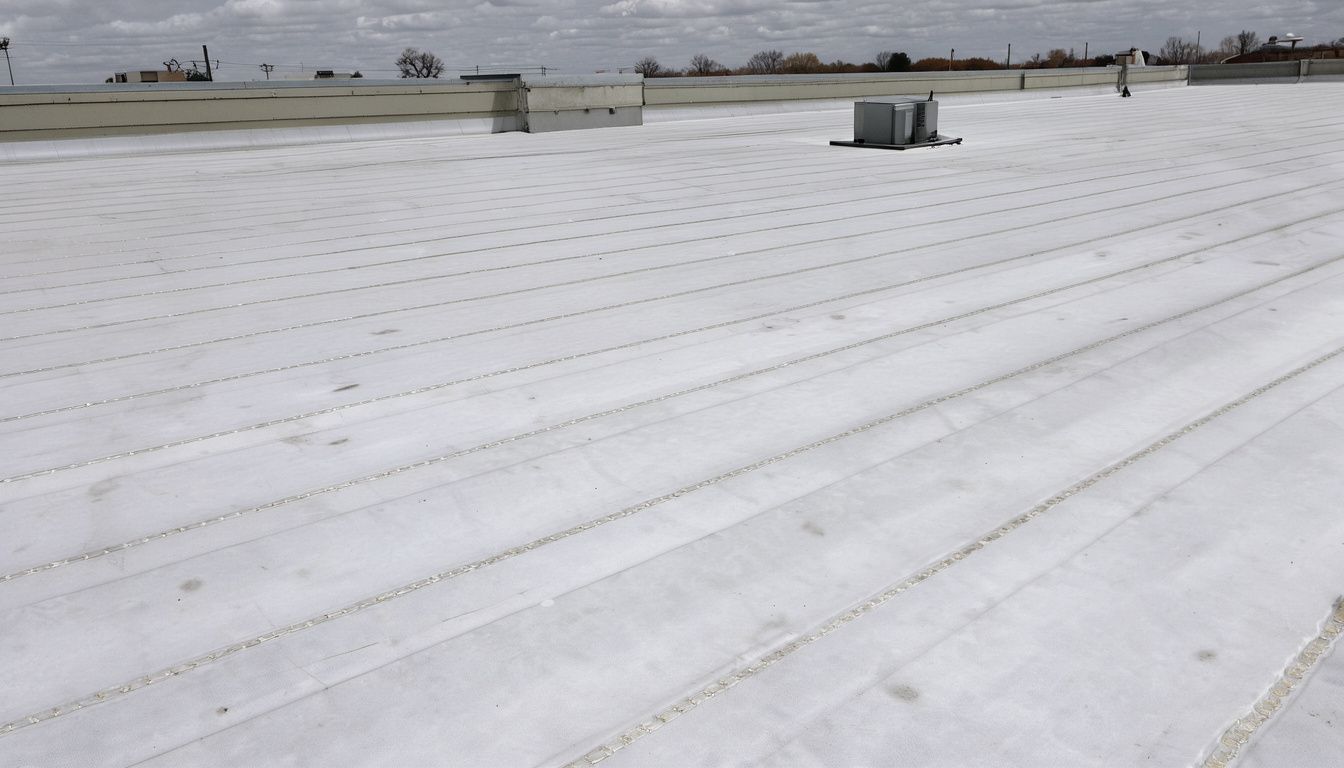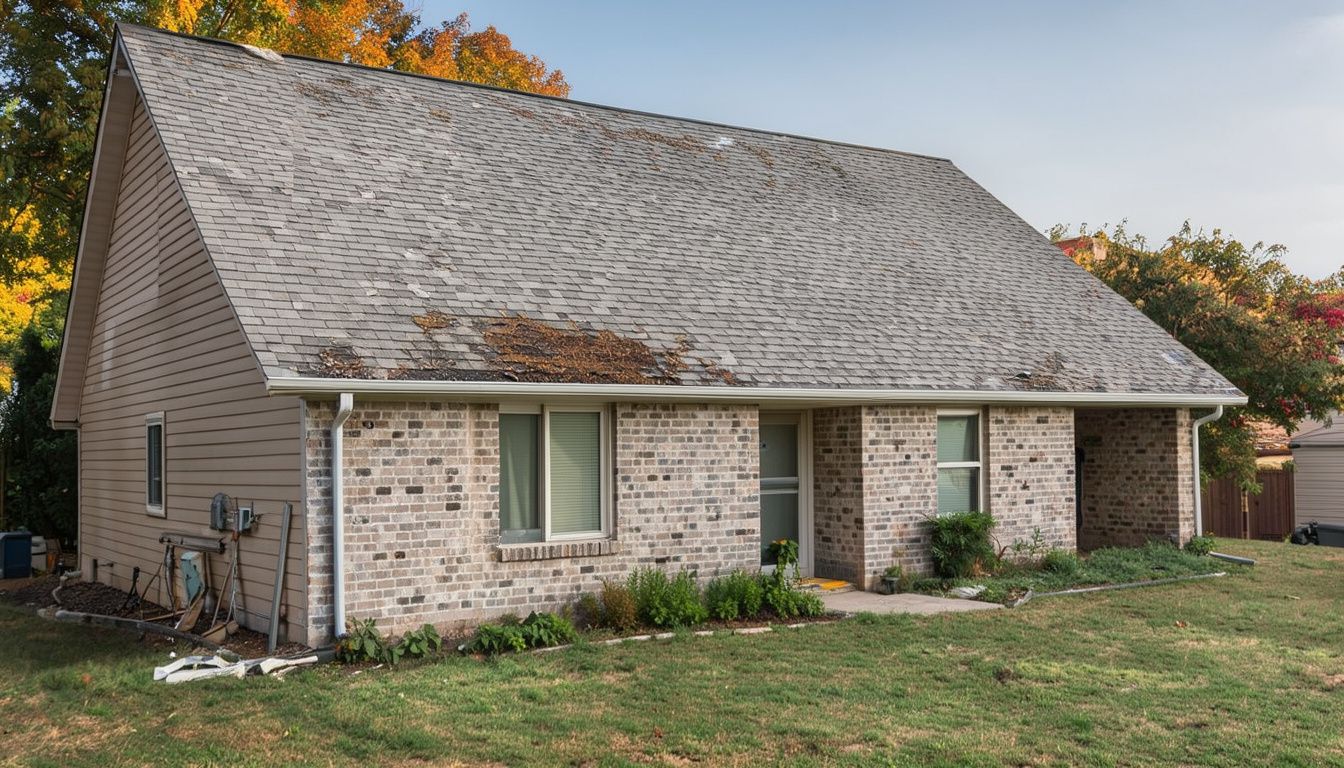
TPO roofing costs $4 to $10 per square foot installed, according to HomeGuide, while Fixr and HomeAdvisor give a wider $4.50 to $16. Roof Observations puts new TPO roofs at around $4 per square foot for a thin ballasted membrane laid over an existing roof and around $14 for a fully adhered 80-mil system with R-30 insulation. Thickness, attachment, insulation and tear-off decide where your bid lands.
TPO Roof Price per Square Foot by Source
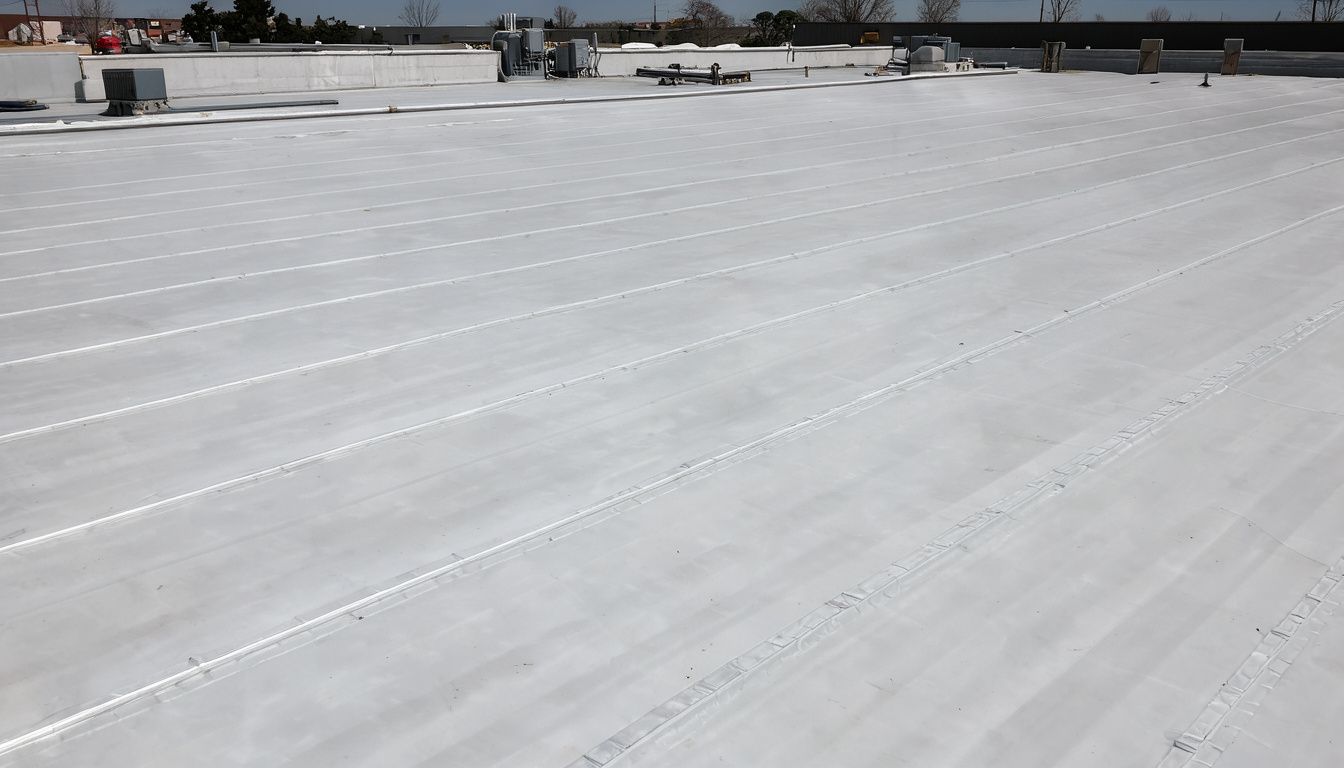
National cost guides survey different jobs, so their ranges never match exactly. Some lean toward homes with a small flat section, others toward warehouses and retail buildings. Reading several side by side gives you a realistic band before the first contractor walks your roof.
The table below lists the installed ranges each publisher gives for TPO, with a note on what the figure covers. All prices are per square foot of roof area.
| Source | Installed price per sq ft | What the figure covers |
|---|---|---|
| HomeGuide (TPO guide) | $4 to $10 | Installed TPO; depends on roof size, membrane system, membrane and insulation thickness |
| HomeGuide (line-item breakdown) | $5.00 to $12.00 | Old roof removal, membrane, insulation and labor added together |
| Fixr (TPO cost guide) | $4.50 to $16 | Complete TPO roofing system, installed |
| HomeAdvisor (TPO guide) | $4.50 to $16 | Installed; whole projects from $2,000 to $40,000 |
| Fixr (flat roof guide) | $4 to $14 | TPO among flat roof materials |
| Roof Observations | around $4 to around $14 | From a 45-mil ballasted recover to an 80-mil fully adhered system with R-30 insulation |
| This Old House | $4 to $10 | National average of $10,700 for a 1,500-square-foot roof |
Two patterns stand out. The low end of every range describes a simple job: thin membrane, no new insulation, often installed over the old roof. The high end describes a full replacement down to the deck with code-level insulation and a premium attachment method.
Why the Ranges Are So Wide
Insulation explains most of the gap. Roof Observations prices a 60-mil mechanically attached TPO roof at $4.85 per square foot with no added insulation, and at $11.85 with R-25 insulation and removal of the existing roof included. The membrane is the same in both rows. What changes is everything underneath it.
That is why a quote that says only "TPO, $7 a foot" tells you very little. You need to know what sits under the membrane before you can judge the number.
Per Square vs. per Square Foot
Commercial bids are often written per "square" rather than per square foot. HomeGuide explains that roofers typically estimate the cost by the square, and that one square covers 100 square feet. A bid of $800 per square is the same as $8 per square foot, so convert before you compare.
What Is Included in an Installed TPO Price
A TPO roof is a system, and each layer has its own line in a detailed bid. Roof Observations lists the parts of a TPO assembly as the roof deck, a vapor barrier if needed, rigid board insulation, a cover board under the membrane where the manufacturer specifies one, and the attachment components such as adhesives, fasteners or ballast.
HomeGuide's breakdown shows how those pieces add up on a typical job:
- Old roof removal: $1.00 to $2.00 per square foot
- Membrane roofing materials: $1.00 to $2.50 per square foot
- Insulation: $0.50 to $3.00 per square foot
- Labor: $2.50 to $4.50 per square foot
- Total installed: $5.00 to $12.00 per square foot
HomeGuide also points out that polyiso insulation sometimes costs more than the TPO material itself. On a roof that needs thick insulation, the membrane can be the smaller part of the materials bill.
Labor vs. Materials
Sources disagree on the split. Roof Observations puts labor at roughly 25% to 40% of a TPO roof and materials at 60% to 75%. HomeAdvisor warns that labor can eat up as much as 70% of the budget. The difference reflects the jobs each one describes: a large commercial roof with thick insulation is material-heavy, while a small, detailed residential roof is labor-heavy.
For labor rates, HomeAdvisor and Fixr both cite $3 to $7 per square foot, or $75 to $120 per hour in some markets. HomeGuide's labor figure is $2.50 to $4.50 per square foot.
TPO Roof Cost by Roof Size
Multiplying a per-square-foot range by your roof area gives a first budget. The two middle columns below are our calculation: roof area times HomeGuide's $4 to $10 range and times the $4.50 to $16 range that Fixr and HomeAdvisor publish. The last column comes straight from Roof Observations, which priced a full tear-off and a 60-mil mechanically attached system with R-25 insulation.
| Roof area | At $4 to $10 per sq ft (our calculation, HomeGuide range) | At $4.50 to $16 per sq ft (our calculation, Fixr and HomeAdvisor range) | Roof Observations, 60-mil mechanically attached, tear-off and R-25 |
|---|---|---|---|
| 1,000 sq ft | $4,000 to $10,000 | $4,500 to $16,000 | $11,850 |
| 2,000 sq ft | $8,000 to $20,000 | $9,000 to $32,000 | $23,700 |
| 5,000 sq ft | $20,000 to $50,000 | $22,500 to $80,000 | $59,250 |
| 10,000 sq ft | $40,000 to $100,000 | $45,000 to $160,000 | $118,500 |
| 25,000 sq ft | $100,000 to $250,000 | $112,500 to $400,000 | $296,250 |
| 50,000 sq ft | $200,000 to $500,000 | $225,000 to $800,000 | $592,500 |
Treat the calculated columns as a band, not a quote. They assume the national range applies at every size, which is not quite true, as the next two sections explain.
Quick estimate: TPO (all thicknesses)
Low and high are the lowest and highest installed prices per square foot in our 5 sources for this system; typical is their median. Full calculator with tear-off and state labor data
Small Roofs Cost More per Square Foot
Fixed costs such as mobilization, a dumpster, edge metal and flashing details get spread over fewer square feet on a small job. Roof Observations notes that prices for very small residential jobs may be as much as 50% higher per square foot than its national figures.
HomeGuide's figures for typical residential jobs show the effect: $7,700 to $14,000 for a house and $1,100 to $5,000 for a garage roof. HomeAdvisor puts most home TPO projects between $6,500 and $24,000, with $10,700 as the average total.
Large Roofs Cost a Little Less
Fixr notes that larger, simpler roofs generally have a lower cost per square foot thanks to economies of scale. The saving is modest. Roof Observations says you may see small per-square-foot reductions for bigger roofs, possibly up to around 5% or a little more for the biggest roofs.
Complexity can wipe out that saving. Roof Observations reports that it can take twice as long, or longer, to install a square of roofing in a complicated area than in an open field of membrane.
Cost Drivers at a Glance
The table below gathers the main levers that move a TPO bid, with the sourced price for each. Some figures are add-ons for one component, not full installed prices, so read the note in each row.
| Cost driver | Option | Sourced price | Source and note |
|---|---|---|---|
| Membrane thickness | 45 mil | $3.00 to $4.50 per sq ft | Fixr; membrane plus standard installation |
| Membrane thickness | 60 mil | $4.00 to $6.50 per sq ft | Fixr; membrane plus standard installation |
| Membrane thickness | 80 mil | $5.50 to $8.50 per sq ft | Fixr; membrane plus standard installation |
| Attachment method | Ballasted | $1.50 to $2.50 per sq ft | HomeAdvisor and Fixr; attachment only |
| Attachment method | Mechanically fastened | $2 to $3 per sq ft | HomeAdvisor and Fixr; attachment only |
| Attachment method | Fully adhered | $2.75 to $3.50 per sq ft | HomeAdvisor; attachment only |
| Insulation | 1 inch polyiso | $0.50 to $1.50 per sq ft | HomeGuide |
| Insulation | 2 inch polyiso | $1.00 to $2.50 per sq ft | HomeGuide |
| Insulation | 3 inch polyiso | $1.30 to $3.00 per sq ft | HomeGuide |
| Tear-off | Remove and dispose of old roof | $1 to $2 per sq ft | HomeGuide, Fixr and Roof Observations |
| Penetrations | Chimneys, drains, curbs, skylights | $200 to $500 added | HomeGuide |
| Flashing | Seams, corners, penetrations | $50 to $500 | HomeGuide |
| Access | Multiple stories, cranes, difficult access | Priced per job | HomeGuide and HomeAdvisor flag it as an added labor cost |
| Permits | Building permit | $150 to $600 | Fixr |
Before you budget from this table, check what your local market adds. Labor rates, union work and code requirements all shift the numbers, as covered below.
Membrane Thickness: 45, 60 or 80 Mil
Roof Observations lists the standard TPO thicknesses as 45-mil (0.045 inches), 60-mil (0.060 inches) and 80-mil (0.080 inches). The membrane has a polyester scrim sandwiched between two layers of TPO for strength. HomeGuide notes that 45 mil and 60 mil are the most common thicknesses.
Fixr's prices for membrane plus standard installation climb with each step: $3.00 to $4.50 per square foot for 45 mil, $4.00 to $6.50 for 60 mil and $5.50 to $8.50 for 80 mil. These are lower than full-system prices because they leave out insulation and tear-off.
On a complete system the gap between thicknesses is small. In the Roof Observations table, a fully adhered roof with R-25 insulation runs $11.70 per square foot at 45 mil, $12.10 at 60 mil and $12.45 at 80 mil.
Is Thicker TPO Worth It?
Roof Observations says thicker TPO membranes typically last longer and perform better than thinner ones, all else being equal. HomeAdvisor adds a caveat: lifespan depends more on material quality than thickness. Both points matter when you weigh the extra cost.
Thickness also changes the warranty you can buy. IKO's U.S. warranty price guide limits its 20-year membrane material warranty to 60 or 80-mil membranes only, and states that 45-mil is not approved for induction welded systems. If you want a long warranty term, the thickness choice may be made for you.
Attachment Method and Its Price
The way the membrane is held down affects cost, wind performance and how the roof behaves over time. HomeAdvisor gives attachment-only prices of $1.50 to $2.50 per square foot for ballasted, $2 to $3 for fastened and $2.75 to $3.50 for adhered systems. Fixr stresses that these figures should not be read as the total installed cost of a TPO roof.
Mechanically Attached
Carlisle describes mechanically attached roof systems as a cost-effective option with few installation temperature restrictions. The membrane is secured with fasteners and plates or battens in the seams. Roof Observations calls this the most common type of TPO system for large commercial roofing projects.
The trade-off is movement. Carlisle notes that in mechanically attached systems the membrane is only fastened in seam areas, allowing the rest of the sheet to flutter in the wind.
Fully Adhered
In a fully adhered system the whole sheet is glued to the cover board or insulation. Carlisle explains that adhesive evenly distributes uplift pressure rather than focusing it on fastening points. Roof Observations says this method typically results in the longest-lasting TPO roof, everything else being equal.
Weather limits when the crew can work. According to Roof Observations, membrane adhesive typically can only be applied above 40°F, although newer adhesives can be applied as low as 25°F. Cold-season jobs can take longer or need special products, which shows up in the price.
Ballasted
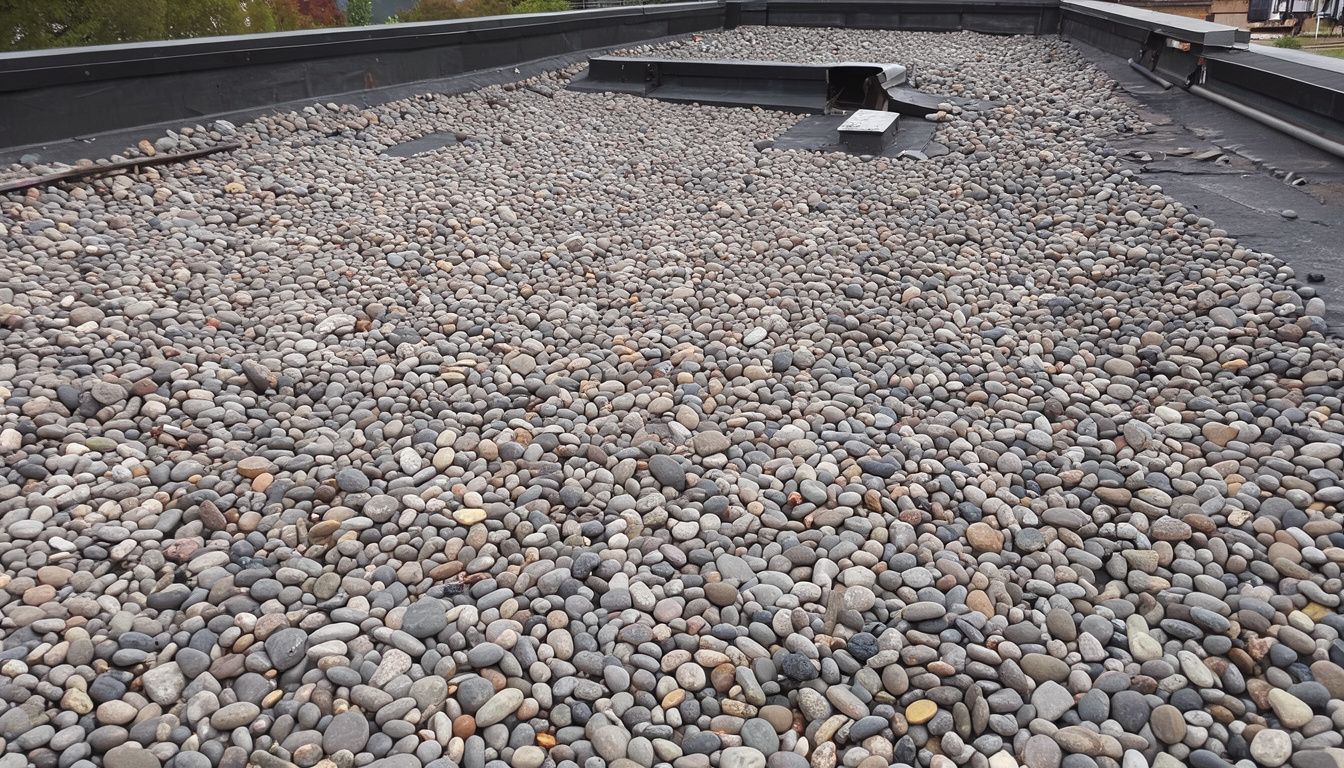
A ballasted roof is loose-laid and held down by river-washed stone or pavers, typically 10 to 20 pounds per square foot of ballast according to Roof Observations. Carlisle notes that ballasted roofs typically cost less and are quicker to install than other systems.
The catch is weight and reflectivity. Roof Observations warns that the structure must be checked before a ballasted roof is specified, and that covering white TPO with stone gives up its cool-roof benefit. It also says ballasted systems usually have the shortest life expectancies and warranty periods.
Induction Welded
Induction welding is a variation on mechanical attachment: plates are fastened to the deck first, then the membrane laid over them is heat-bonded to each plate from above. Versico lists no odors or VOCs and minimal noise for building occupants among its benefits. None of the national cost guides break out a separate price for it, so ask each contractor to quote it as a line item.
Insulation and Cover Boards
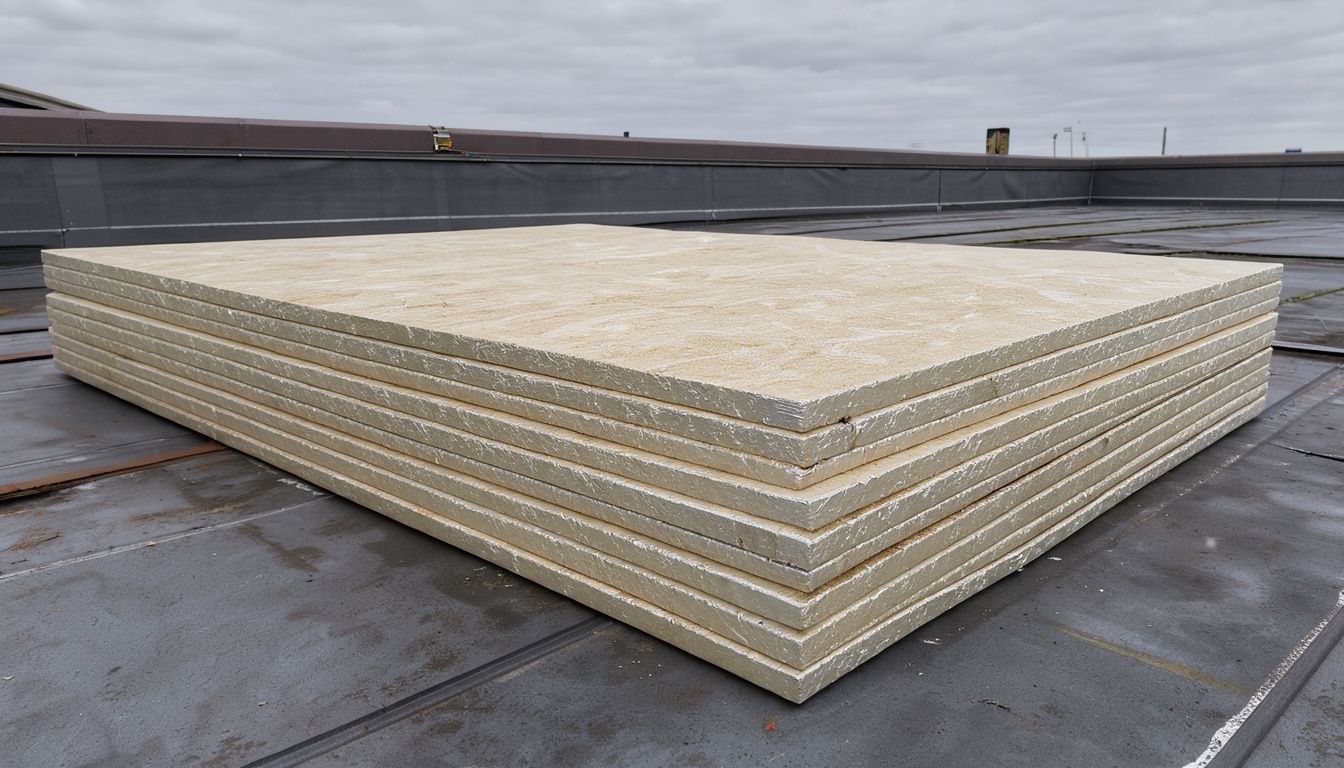
Energy codes set how much insulation a reroof needs, and that requirement often decides the price more than the membrane does. Roof Observations notes that R-25 is the typical requirement in the southern half of the U.S. and R-30 is common in the northern half. Some places differ, so always check your local code.
HomeAdvisor prices installed roof insulation at $1.60 to $4.20 per square foot depending on thickness and type, with polyiso at $1.60 to $2.40. HomeGuide's polyiso figures run from $0.50 to $1.50 for 1 inch up to $1.30 to $3.00 for 3 inches.
Why a Cover Board Is Worth Asking About
A cover board is a thin, dense layer between the insulation and the membrane. Johns Manville states that adding a cover board enhances the long-term performance of a commercial roofing system. Ask each bidder whether the manufacturer warranty you want calls for one.
If two quotes differ by a dollar or more per square foot, check whether one includes a cover board and the other does not. That single line can explain the gap.
Tear-Off vs. Recover
Removing the old roof adds cost but resets the assembly. HomeGuide, Fixr and Roof Observations all put removal at $1 to $2 per square foot. Roof Observations adds that removal can cost more in some areas.
A recover, where the new TPO goes over the existing roof, avoids that charge and often avoids new insulation. Roof Observations warns that a recover typically has a useful life expectancy about 25% shorter than a full replacement, and that roofs installed over an existing roof tend to leak more often.
Recover pros
- No removal charge, which HomeGuide, Fixr and Roof Observations put at $1 to $2 per square foot
- Often no new insulation required by code
- Keeps the existing roof as the base when it is dry and sound
Recover cons
- About 25% shorter useful life, per Roof Observations
- Tends to leak more often than a roof built from the deck up
- Not allowed over two existing layers or a water-soaked roof
When the Code Forces a Full Tear-Off
You cannot always choose. Roof Observations explains that if a building already has two layers of roofing, the building code requires removal down to the deck. Building Enclosure notes that recovering is not allowed where the existing roof is water soaked or too deteriorated to serve as a base.
Wet insulation is the common trigger. Building Enclosure reports that some local or state codes require full replacement if more than 25 percent of a roof area has moisture present. Ask for a moisture survey before you accept a recover bid.
Access, Location and Other Job-Specific Costs
Two roofs of the same size can price very differently because of where they are and how a crew reaches them. HomeGuide lists multiple stories, vents, skylights, chimneys and complex roof shapes as factors that raise labor cost, and advises budgeting for cranes, storage and special permits on large commercial roofs.
Location matters too. Roof Observations notes that states where commercial roofing is typically done by union roofers tend to have higher labor costs. Fixr points out that strict local wind codes can require particular roof assemblies or attachment specifications.
Penetrations and Rooftop Equipment
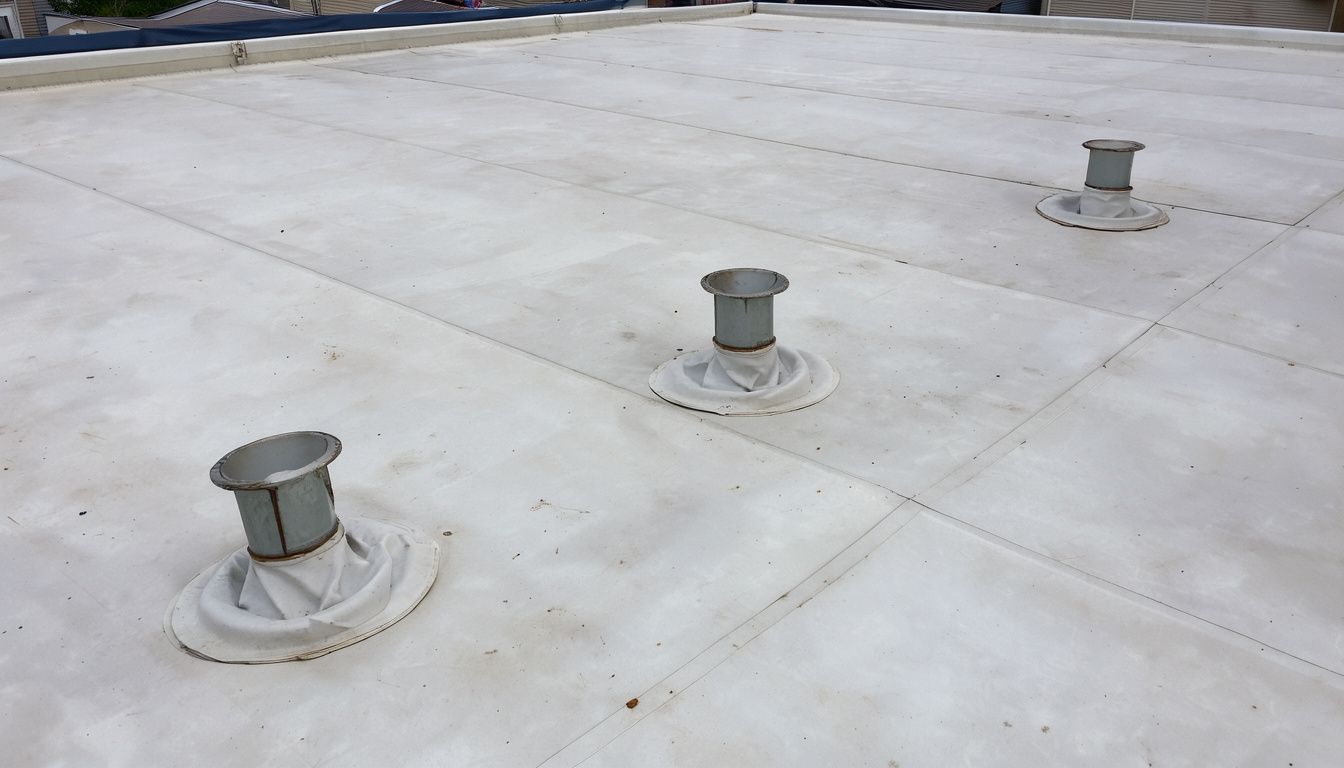
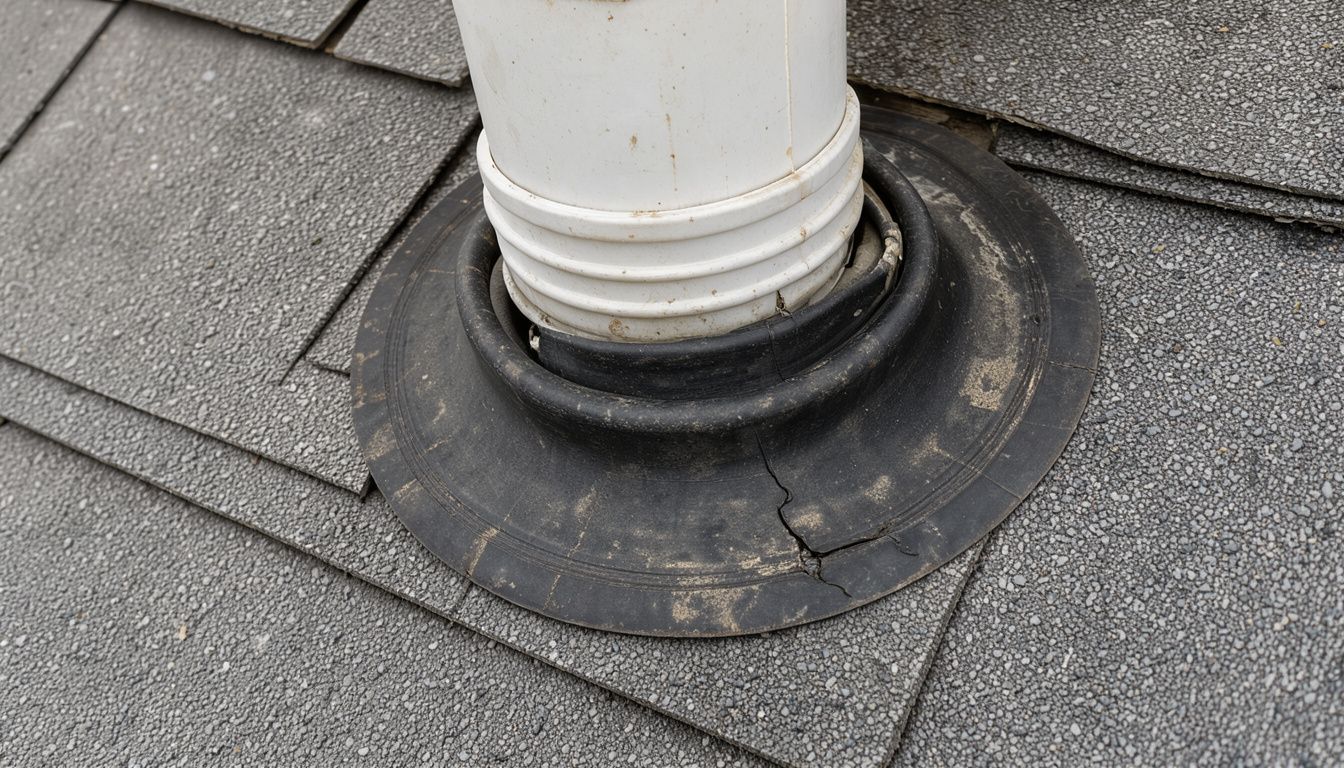
Every pipe, drain, curb and HVAC unit needs its own flashing detail. HomeGuide says chimneys, drains, curbs and skylights add $200 to $500 to the final price. Building Enclosure reports that approximately 75 percent of all roof leaks are reported at flashings and penetrations, so this is not the place to accept a shortcut.
Permits, Dumpsters and Fees
Fixr puts most flat roof permit fees between $150 and $600. Roof Observations reminds owners that building permits, dumpster rental, disposal fees and local taxes may all apply. HomeGuide notes that contractors often include the permit cost in the estimate, so confirm whether yours does.
TPO vs. EPDM vs. PVC Cost
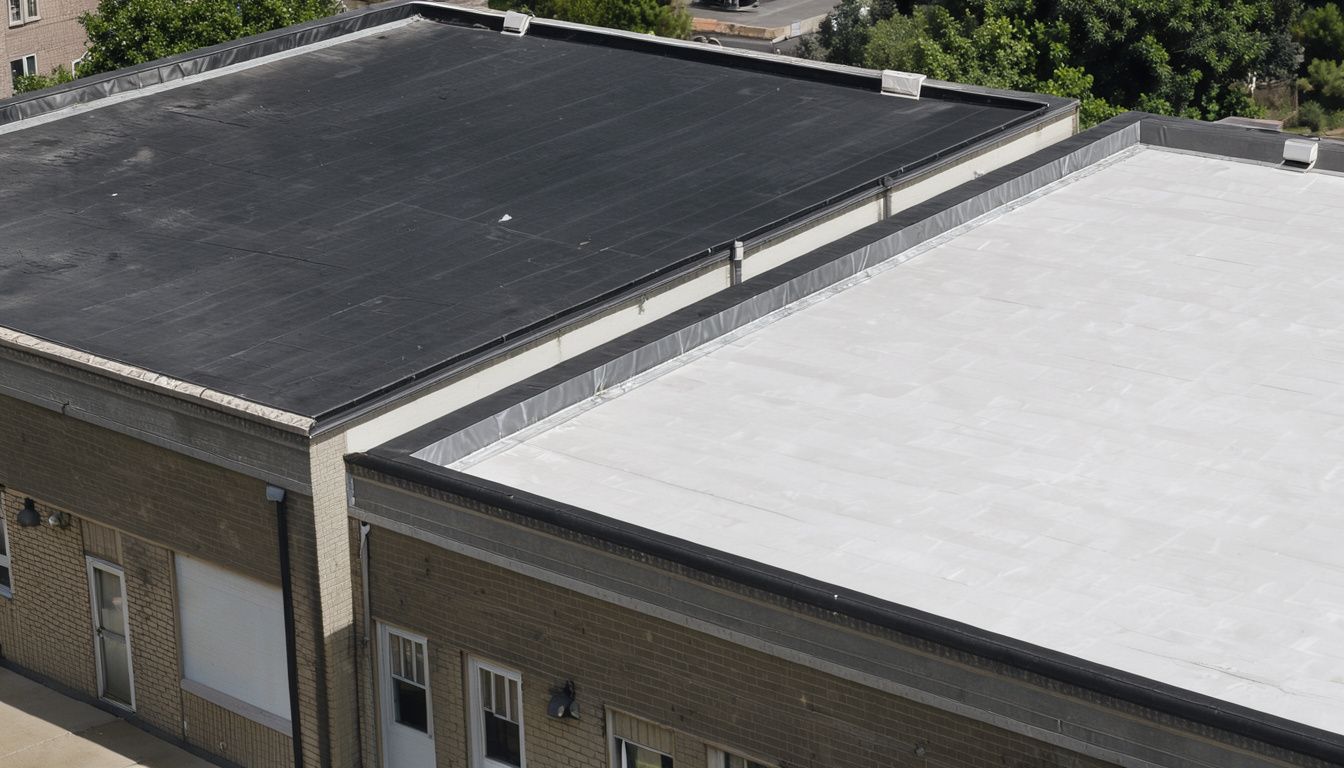
TPO, EPDM and PVC are the three common single-ply membranes for flat roofs. HomeGuide describes TPO as falling between EPDM and PVC in price and durability.
TPO
HomeGuide: $4 to $10 per square foot installed. Heat-welded seams, white surface that qualifies as an Energy Star cool roof.
EPDM
HomeGuide: $3.50 to $10.00 per square foot installed. Glued seams that may break down sooner than TPO and PVC.
PVC
HomeGuide: $5 to $12 per square foot installed. The most durable, longest-lasting and most expensive of the three.
The table compares installed prices and lifespans from the same publishers so the numbers line up.
| Membrane | HomeGuide installed per sq ft | Fixr installed per sq ft | HomeGuide life expectancy |
|---|---|---|---|
| EPDM | $3.50 to $10.00 | $4 to $13 | 15 to 25 years |
| TPO | $4.00 to $10.00 | $4 to $14 | 10 to 25 years |
| PVC | $5.00 to $12.00 | $5 to $16 | 20 to 30 years |
EPDM starts at the bottom of both price ranges. HomeGuide notes that because EPDM is glued instead of heat welded, its seams may break down sooner than TPO and PVC.
PVC usually costs the most. HomeGuide calls it the most durable, longest-lasting and most expensive of the three. TPO sits in the middle: HomeGuide says it is heat welded like PVC, with seams more reliable than EPDM at a lower price than PVC.
Quick estimate: EPDM (rubber)
Low and high are the lowest and highest installed prices per square foot in our 4 sources for this system; typical is their median. Full calculator with tear-off and state labor data
Energy Savings From a White Membrane
White TPO can lower cooling costs on sunny roofs. HomeAdvisor says its bright white surface reflects up to 80% of the sun's rays, and HomeGuide notes that white TPO roofs qualify as Energy Star-compliant cool roofs.
How Long a TPO Roof Lasts and Its Cost per Year
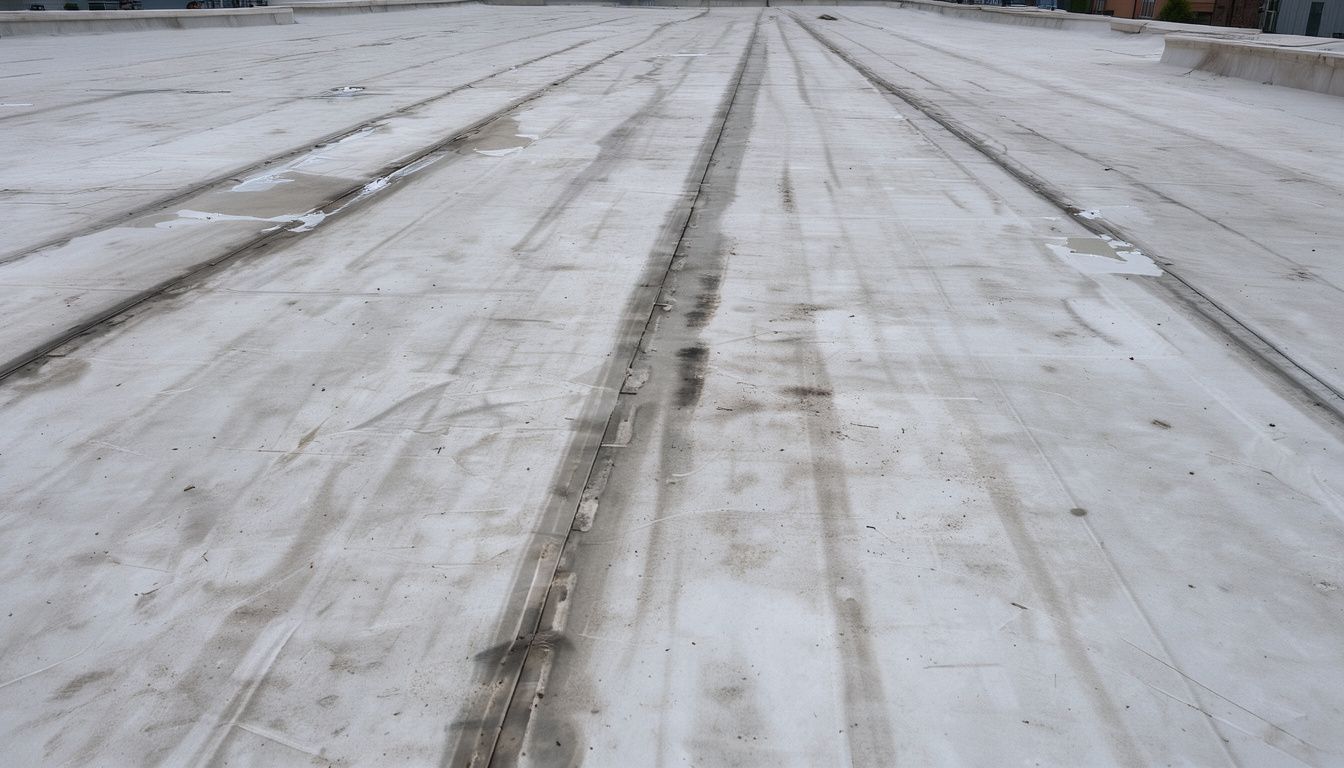
Lifespan estimates vary widely, which affects how you judge a price. HomeGuide says TPO roofs last 10 to 25 years on average. Fixr puts the average at 20 to 30 years, and This Old House says 15 to 30 years with proper care and routine maintenance.
A cheaper roof that wears out early can cost more per year than a thicker, fully adhered roof that lasts longer. When you compare bids, divide each price by the warranty term the manufacturer will actually issue for that system. That gives a rough cost per year of coverage.
Maintenance protects that investment. NRCA recommends inspecting roof systems at least twice per year, preferably in spring and fall.
Warranty Costs and What They Buy
There are two kinds of coverage on a TPO roof: the manufacturer's warranty on the membrane or system and the contractor's workmanship warranty. Fixr notes that longer or more comprehensive warranties can increase project costs because they may require specific membrane thicknesses, components, installation standards or inspections.
Manufacturers publish their warranty fees. IKO's U.S. warranty price guide, for its Diamond Shield system warranty, lists the following charges:
| Warranty term | Price per sq ft | Minimum charge |
|---|---|---|
| 5 years | $0.02 | $350 |
| 10 years | $0.04 | $500 |
| 15 years | $0.07 | $750 |
| 20 years | $0.10 | $1,000 |
| 25 years | $0.12 | $1,500 |
| 30 years | $0.15 | $2,000 |
IKO also lists a membrane-only material warranty at no cost, a $750 fee to transfer a warranty to a new owner, and options such as higher wind speed coverage for an added fee. Its 25 and 30-year terms require a minimum of 1.0 inch of IKO insulation under the membrane.
What a System Warranty Requires
Premium warranties come with conditions. IKO requires installation by an IKO approved applicator, a successful inspection by an IKO field services technician, and a warranty application submitted a minimum of 14 days in advance of job start. Holcim Elevate describes its Red Shield warranty as covering material and labor with no-dollar limit liability, edge-to-edge system coverage, and transfer from owner to owner, with terms from five years to a Platinum 30-year warranty.
Ask every bidder which manufacturer warranty they will register, for what term, and whether the fee is in the price. IBHS also notes that the warranted wind speed may or may not match the basic wind speed set for your location, so check that number on the warranty itself.
What Raises or Lowers a TPO Bid
Most of the difference between bids comes from a short list of choices. Knowing them helps you see whether a low number reflects a leaner specification or an efficient contractor.
Things that push a bid up:
- Full tear-off, especially with two existing layers or wet insulation
- Insulation thick enough to meet R-25 or R-30 code requirements
- Fully adhered attachment and 80-mil membrane
- Many penetrations, curbs and rooftop units to flash
- Difficult access, multiple stories or a crane lift
- Long manufacturer warranty terms with added wind or puncture coverage
- Cold-weather installation that limits adhesive work
Things that bring a bid down:
- A permitted recover over a single dry existing roof
- Mechanically attached or ballasted systems where the structure and wind zone allow them
- Large, open roof areas with few penetrations
- Reusing existing insulation where a moisture survey shows it is dry
Roof Observations notes that a good roof consultant may find a way to re-use existing insulation and save a lot of money on a replacement. On a large building, that review can pay for itself.
How to Compare TPO Quotes
Price alone is a poor way to choose between bids. Put each quote in a spreadsheet with the same rows, then compare line by line.
Building codes also set a baseline. Building Enclosure notes that thermoplastic single-ply roof coverings must comply with ASTM D 4434, ASTM D 6754, ASTM D 6878 or CAN/CGSB 37-54 A bid should name a membrane product that meets the applicable standard.
Questions to Ask Each Contractor
HomeGuide's hiring checklist is a useful starting point. Ask how long the company has installed TPO roofs, whether it is licensed, insured and bonded, whether it can provide references, whether the quote includes waste disposal or taxes, and whether it will obtain the permits.
Add a few TPO-specific questions. Is the company approved by the membrane manufacturer for the warranty you want? Who on the crew holds training in heat welding? NRCA's thermoplastic systems installer certification, for example, requires a minimum of 24 months' experience installing thermoplastic roof systems.
When to Hire a Roof Consultant
For a large commercial job, an independent consultant can write the specification so every contractor bids the same system. Roof Observations recommends hiring a credentialed professional roof consultant before a roof project that costs more than $50,000. The consultant's fee buys you comparable bids and someone to watch the installation.
Estimate Your Own TPO Roof
Start with your roof area in square feet, then decide on a tear-off or recover, the insulation level your code requires and the attachment method that suits your deck and wind zone. With those choices made, you can estimate your roof with our TPO calculator and compare its range with the bids you receive.
Roof area from your house footprint
Geometry only: footprint plus overhangs, multiplied by the slope factor of the pitch (square root of 1 + (rise / 12) squared). Dormers, valleys and waste are not included.
A calculator gives you a band, not a price. Only an on-site inspection reveals wet insulation, deck damage and the real number of penetrations. Use the estimate to spot a bid that is far outside the published ranges, then ask that contractor to explain the difference line by line.
Frequently asked questions
How much does TPO roofing cost per square foot?
HomeGuide puts installed TPO at $4 to $10 per square foot, while Fixr and HomeAdvisor give $4.50 to $16. Roof Observations ranges from around $4 for a 45-mil ballasted membrane over an existing roof to around $14 for a fully adhered 80-mil system with R-30 insulation. Insulation and tear-off explain most of the spread.
How much does a 10,000 square foot TPO roof cost?
Roof Observations prices a 10,000 sq ft replacement with tear-off, 60-mil mechanically attached TPO and R-25 insulation at $118,500. Applying HomeGuide's $4 to $10 range to the same area gives $40,000 to $100,000, which is our calculation and fits simpler jobs without thick new insulation.
Is 60 mil TPO worth the extra cost over 45 mil?
Fixr prices 45-mil TPO with standard installation at $3.00 to $4.50 per square foot and 60-mil at $4.00 to $6.50. On a full insulated system the gap is small: Roof Observations lists $11.70 for 45 mil and $12.10 for 60 mil, fully adhered with R-25. IKO's 20-year membrane material warranty is limited to 60 or 80-mil membranes.
Is TPO cheaper than EPDM or PVC?
HomeGuide puts installed EPDM at $3.50 to $10.00 per square foot, TPO at $4.00 to $10.00 and PVC at $5.00 to $12.00. TPO usually sits between the two in price and durability.
How much does tear-off add to a TPO roof?
HomeGuide, Fixr and Roof Observations put removal and disposal at $1 to $2 per square foot. If the building already has two roof layers, Roof Observations notes that the code requires removal down to the deck.
How long does a TPO roof last?
Estimates vary: HomeGuide says 10 to 25 years, This Old House 15 to 30 years, and Fixr 20 to 30 years. Roof Observations notes that thicker membranes typically last longer, and that fully adhered systems typically give the longest-lasting TPO roof.
How much does a TPO roof warranty cost?
IKO's U.S. warranty price guide charges $0.02 per square foot for a 5-year system warranty up to $0.15 for 30 years, with minimums from $350 to $2,000. A membrane-only material warranty is listed at no cost. Fixr notes that longer warranties can raise project cost because they may require specific thicknesses, components or inspections.
Sources
- HomeGuide, homeguide.com/costs/tpo-roofing-cost (read November 22, 2026)
- HomeGuide, homeguide.com/costs/flat-roof-replacement-cost (read November 22, 2026)
- HomeGuide, homeguide.com/costs/rubber-roof-cost (read November 22, 2026)
- Fixr, fixr.com/articles/tpo-roof-cost-installation-variables-and-project-prices (read November 22, 2026)
- Fixr, fixr.com/costs/flat-roof-installation (read November 22, 2026)
- HomeAdvisor, homeadvisor.com/cost/roofing/tpo-roof (read November 22, 2026)
- Roof Observations, roofobservations.com/tpo-roofing-cost-guide/ (read November 22, 2026)
- This Old House, thisoldhouse.com/roofing/tpo-roofing-material (read November 22, 2026)
- IKO, iko.com/comm/documents/single-ply-iko-innovitpotm-single-ply-warranty-price-guide-us/ (read November 22, 2026)
- Carlisle, carlislesyntec.com/Resources/Media/Blog-Landing-Page/SpecTopics/2023/09/25/Mechanically-Attached-vs-Fully-Adhered-Roof-Systems (read November 22, 2026)
- Carlisle, carlislesyntec.com/en/Resources/Media/Blog-Landing-Page/SpecTopics/2020/01/09/Ballasted-Roofs-A-New-Look-at-an-Old-System (read November 22, 2026)
- Versico, versico.com/Education/Application-Methods/Induction-Welded (read November 22, 2026)
- Johns Manville, jm.com/en/commercial-roofing/roofing-insulation-and-cover--boards/ (read November 22, 2026)
- Building Enclosure, buildingenclosureonline.com/articles/83783-roofing-code--section-1507-13-thermoplastic-single-ply-roofing (read November 22, 2026)
- Building Enclosure, buildingenclosureonline.com/articles/84345-roofing-code-recovering-versus-replacement (read November 22, 2026)
- Building Enclosure, buildingenclosureonline.com/articles/83807-roofing-details-perimeter-flashing (read November 22, 2026)
- IBHS, ibhs.org/guidance/ricowi-roof-guide-single-ply-membrane/ (read November 22, 2026)
- Holcim Elevate, holcimelevate.com/us-en/resources/building-owners-toolbox (read November 22, 2026)
- NRCA (Professional Roofing), professionalroofing.net/articles/article/2338 (read November 22, 2026)
- NRCA, nrca.net/procertification/certifications/thermoplastic-systems-installer (read November 22, 2026)
- Sika Sarnafil, usa.sika.com/sarnafil/en/products-systems/pvc-roofing-systems/rhinobond-system.html (read November 22, 2026)
- HomeAdvisor, homeadvisor.com/cost/roofing/rubber-membrane (read November 22, 2026)